For a plumber, an HVAC company or a clinic, the phone is where work comes from. After hours, it often rings with nobody there to answer.
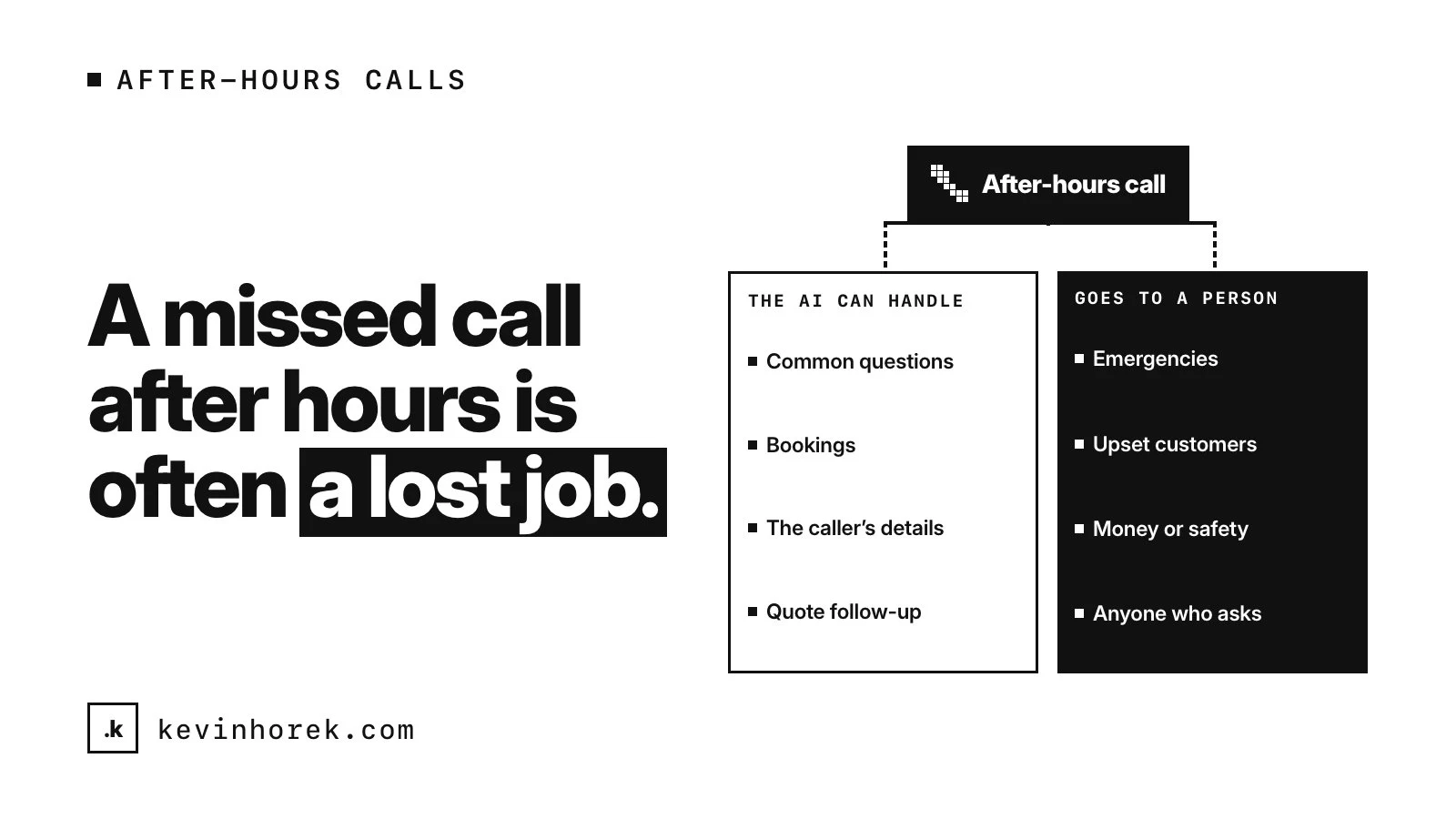
A caller with a burst pipe or no heat may not leave a voicemail and wait until morning. They can call the next business on the list. A missed call after hours is often a lost job.
AI voice agents can now answer those calls, hold a natural conversation and book work. I have spent time looking at this space, but I have not shipped a product in it. So this is how I would approach it, not a case study.
Start with the calls you actually miss
Before choosing a tool, look at a few weeks of call logs. When do after-hours calls come in? How many go unanswered? What did those callers want?
Sort them: new jobs, changes to existing bookings, simple questions, emergencies and spam. That list decides what to build, and it gives you a baseline to measure against later.
It might also show that you do not need an AI agent at all. If most missed calls are simple questions, a better greeting and a text back with a booking link may cover it. I wrote about that choice in do you need an AI agent, or just a better workflow?
What an AI agent can reasonably handle
I would give it a short list of jobs, each with clear limits:
- Answer common questions from a written list you approve: hours, service area, what you do and how booking works. If the answer is not on the list, it says someone will follow up.
- Book appointments into real open slots in your calendar, under your rules for job types, areas and lead times.
- Take details: name, number, address, what is wrong, how urgent it feels and anything a technician needs to know before arriving.
- Handle quote follow-up when a customer calls about a quote you sent: take their questions or their go-ahead and pass it on.
- Triage: sort each call into emergency, urgent or can wait, using rules you write rather than the model's judgment.
Every call should end with a short written summary sent to the right person.
What must go to a person
Some calls should never be handled by the AI alone:
- Emergencies. Anything where someone could be hurt: a gas smell, water near electrical equipment, a worrying symptom at a clinic. If anyone may be in danger, the agent tells the caller to contact emergency services, then reaches your on-call person at once. It does not troubleshoot.
- Upset customers. Complaints, disputes, anyone angry or distressed.
- Anything with money or safety at stake. Prices, discounts, refunds, warranty decisions, payment problems and any advice that could be unsafe if wrong.
- Anyone who asks for a person.
Write these triggers down as rules, then test them with scripts of difficult calls before going live. Booking a slot and promising that a technician is on the way are different actions with different consequences, which is the same thinking behind where an AI agent should ask for human approval.
Design the handoff
A handoff that goes nowhere is worse than voicemail.
- Transfer emergencies live to the on-call person, with the summary texted to them as the call connects.
- Have a backup. If the on-call person does not answer, try a second person, then take a detailed message.
- Only promise a callback time you can keep.
- Never say help is on the way unless a person has confirmed it.
- Log every handoff: who was contacted, when and whether they answered.
Tell callers they are talking to AI
Start every call by saying it is an AI assistant, and offer to take a message for a person. It is the honest thing to do, and some places require it. In the EU, the AI Act's transparency rules, which apply from 2 August 2026, require that people are told they are interacting with an AI system from the start, unless that is obvious.
Outgoing calls raise a separate question. In 2024 the FCC confirmed that AI-generated voices count as "artificial" under the US Telephone Consumer Protection Act, so those calls are held to the same consent standards as robocalls. Before an AI calls anyone back about a quote, make sure you have the consent your rules require. Or keep the AI on incoming calls and have a person make the follow-ups.
Recording and consent
A voice agent listens to, transcribes and usually stores every call. I would treat that as recording.
The rules differ by country and, in the US, by state. Washington State's law, for example, makes it unlawful to record a private phone call without the consent of all participants. In Canada, the Privacy Commissioner's guidance on recording customer calls says businesses must tell customers a call is being recorded and why, and give them a choice.
In practice:
- Say at the start that the call is recorded, and why.
- Offer an alternative, such as leaving a message for a person.
- Keep recordings only as long as you need them, and limit who can see them.
Clinics have health privacy rules on top of this. Check your local rules, and get proper advice before going live.
Measure it
Compare against the baseline from your call logs:
- After-hours calls answered, and callers who hung up on the AI.
- Jobs booked from those calls, and how many actually happened.
- Emergency handoffs, and how long until a person reached the caller.
- Callers who asked for a person.
- Wrong bookings, wrong answers and complaints.
Then read a sample of transcripts every week. The numbers tell you how often something happens. The transcripts tell you why.
Start small
Run it overnight on one line first, with voicemail as the fallback. Have a person read every call summary for the first few weeks. Widen it only when the transcripts show it handles calls the way your best person on the phone would.
If you run a service business and are thinking about AI for after-hours calls, email me with what your missed calls look like. I will tell you honestly whether an AI agent or a simpler workflow fits.