Together Through
Help families feel prepared, and less alone, between appointments.
The problem
Families living with scoliosis can wait months between specialist appointments. In between there are photos, brace and physio notes, and worry, but no reliable way to see whether anything has changed or to know what to ask at the next visit.
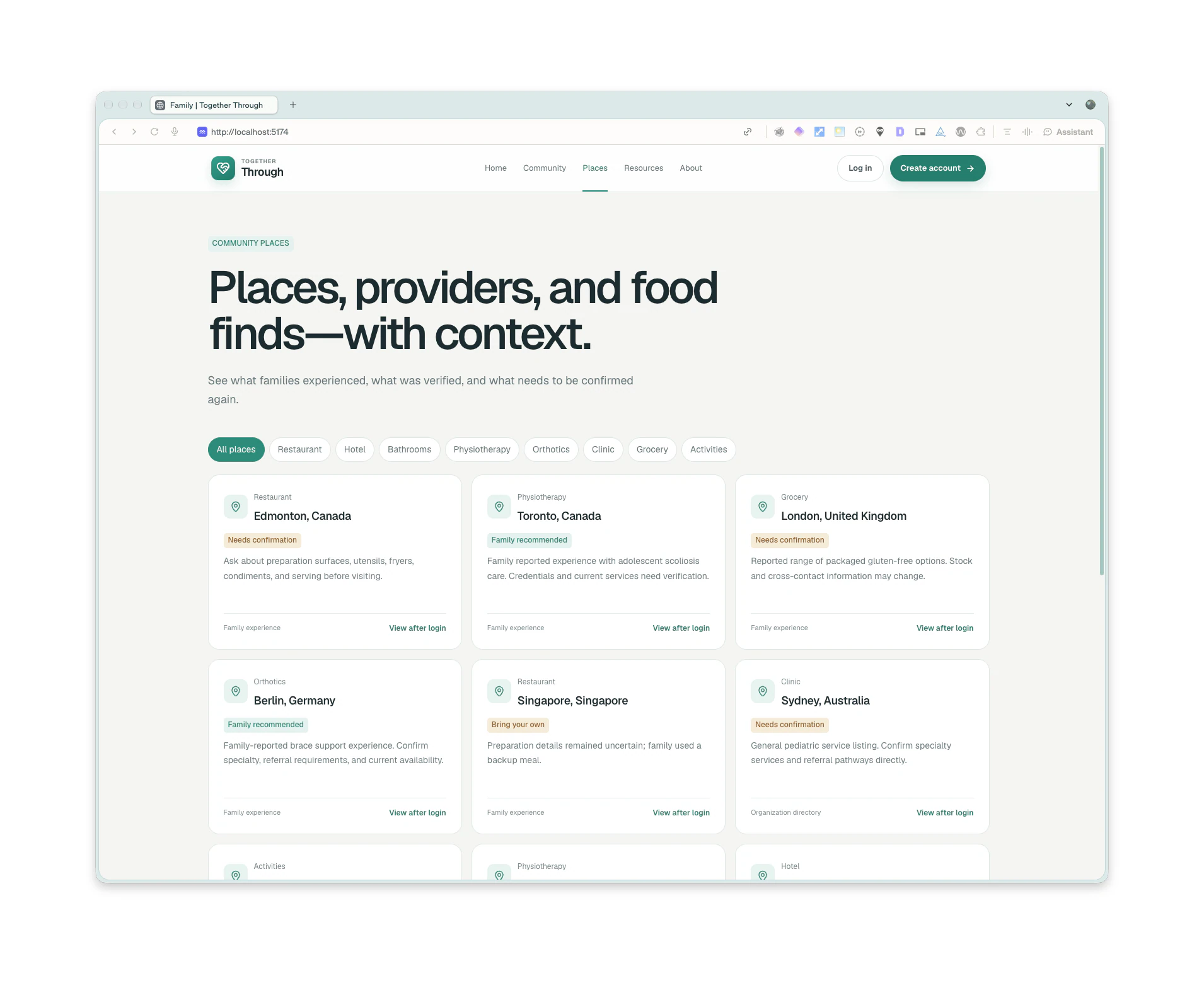
A condition is not only medical, either. It shows up at school, in sports, at friends’ houses, in restaurants and on trips, where families end up explaining the same needs again and again.
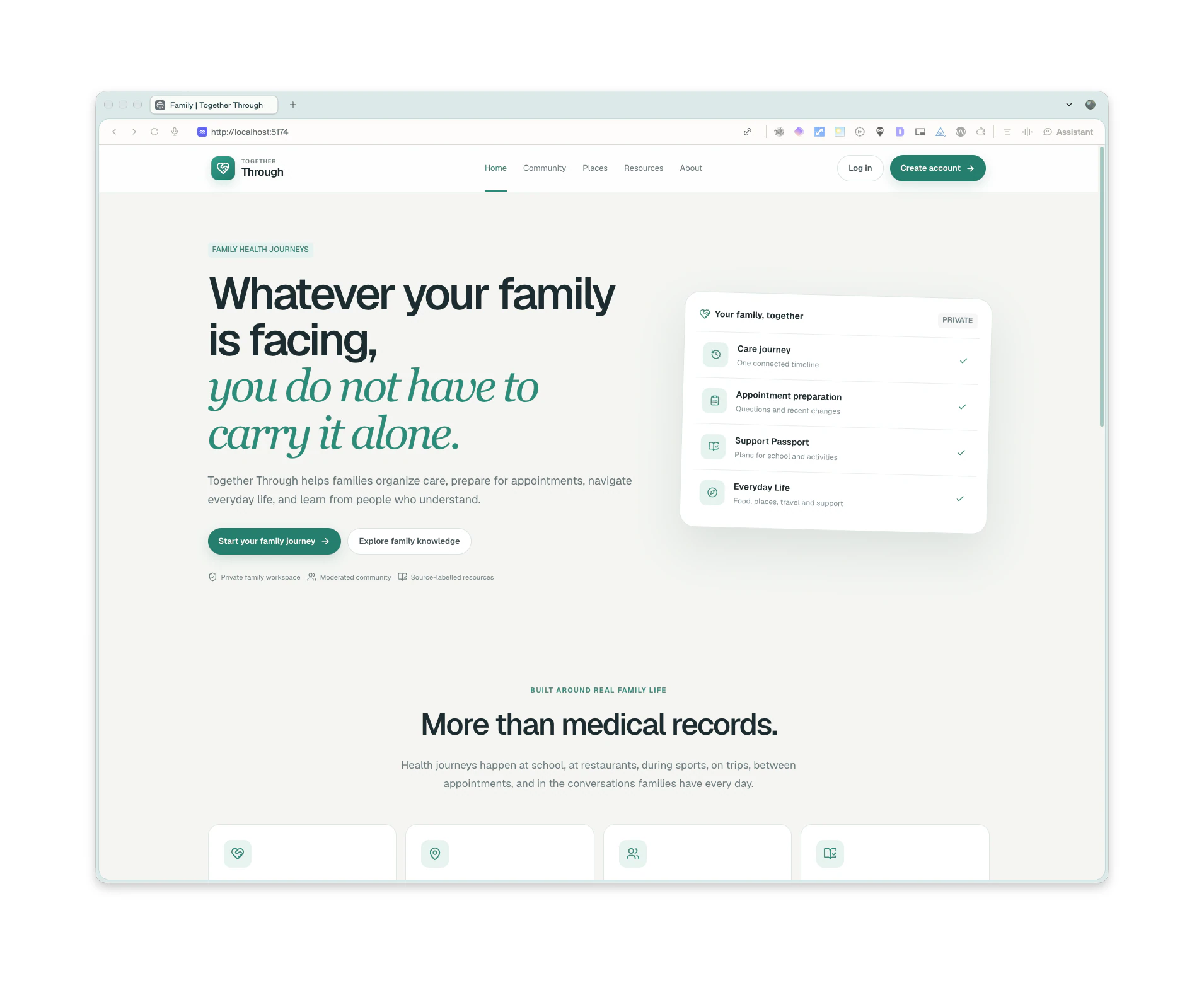
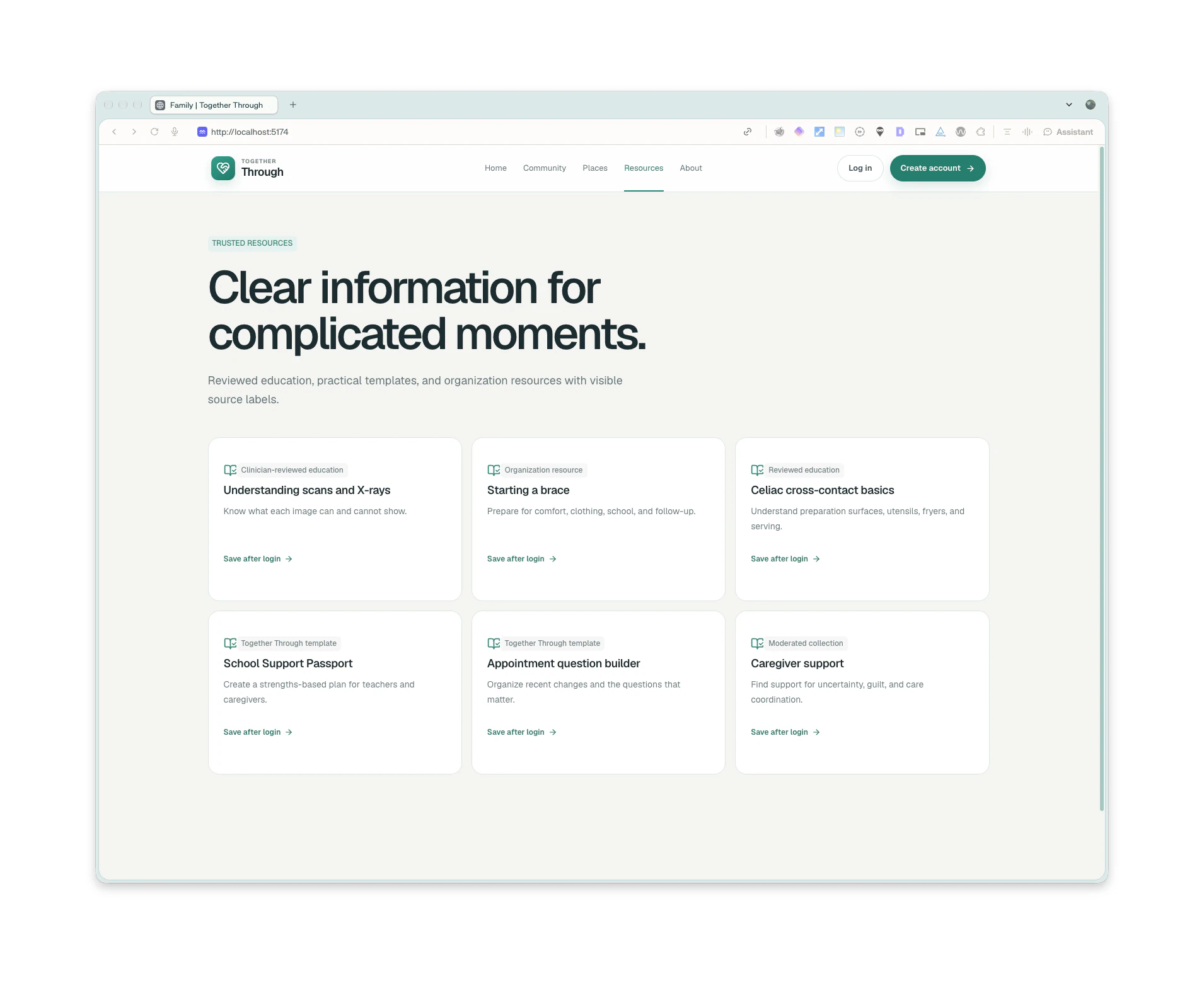
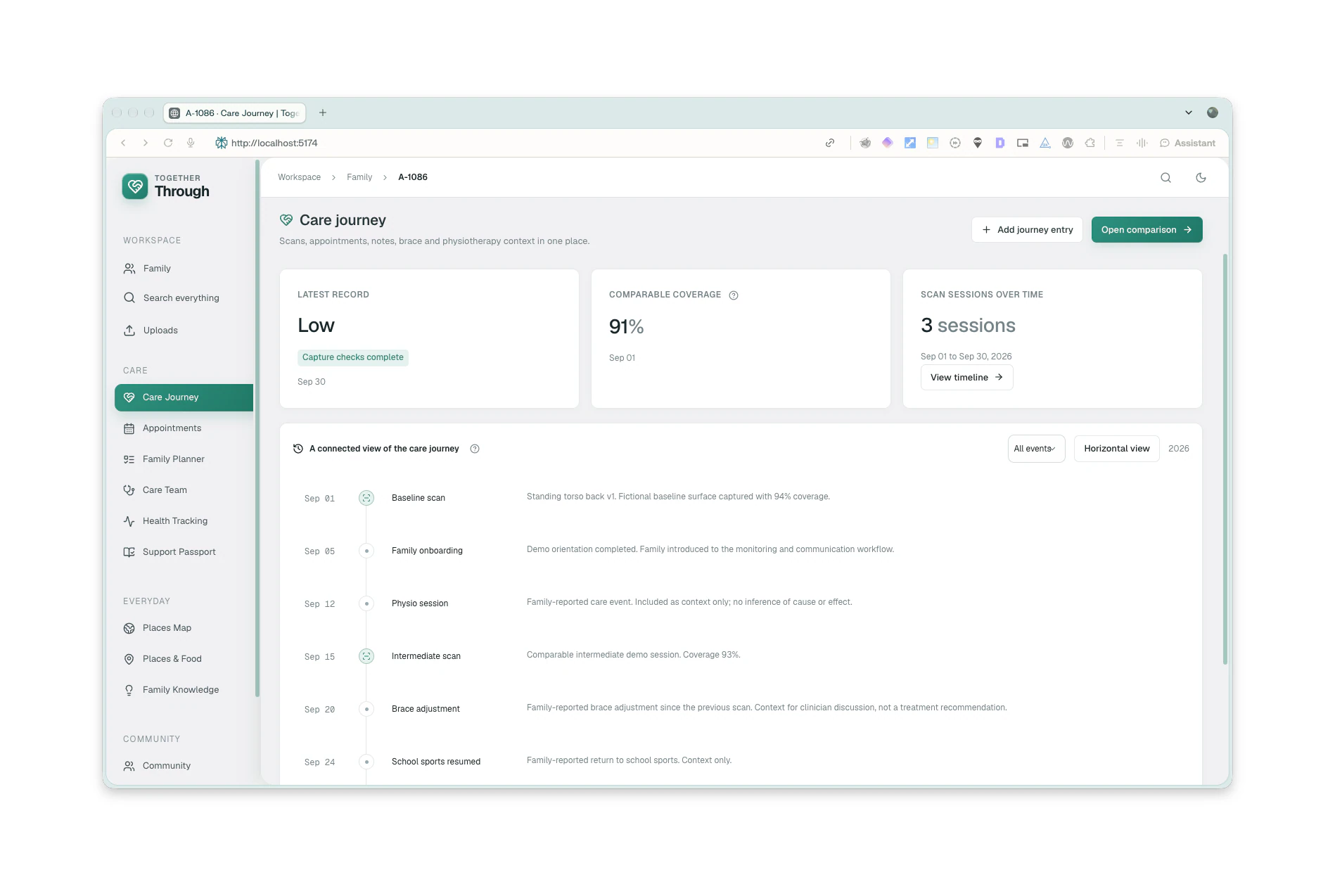
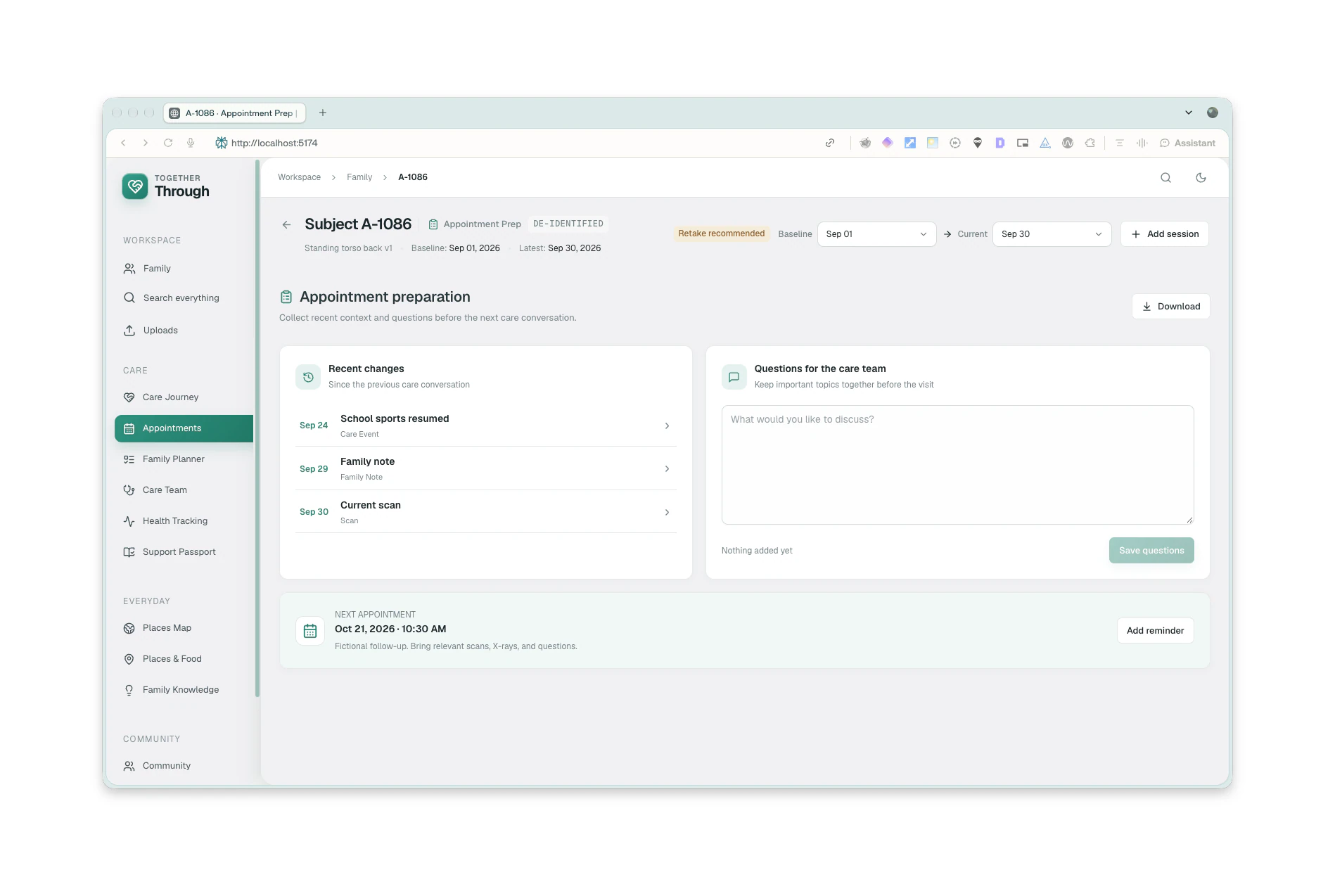
Together Through starts with repeat back scans and the conversations around them, and grows into the rest of family life: a care journey, appointment preparation, a support passport, and places and resources that understand.
Key decisions
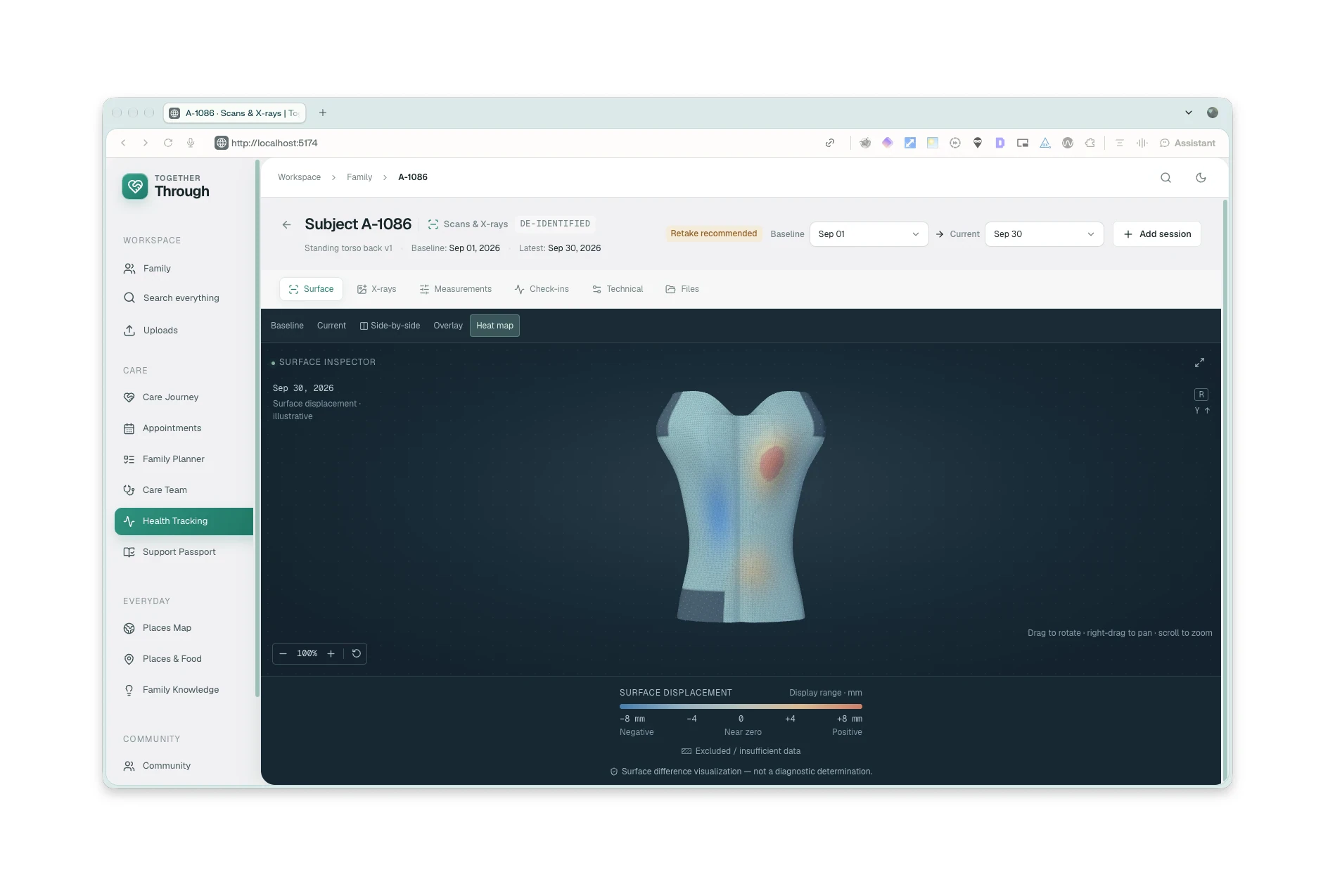
A difference between two scans can come from posture, camera position or coverage, not only from the body.
Show the raw difference, or show it with how far it can be trusted.
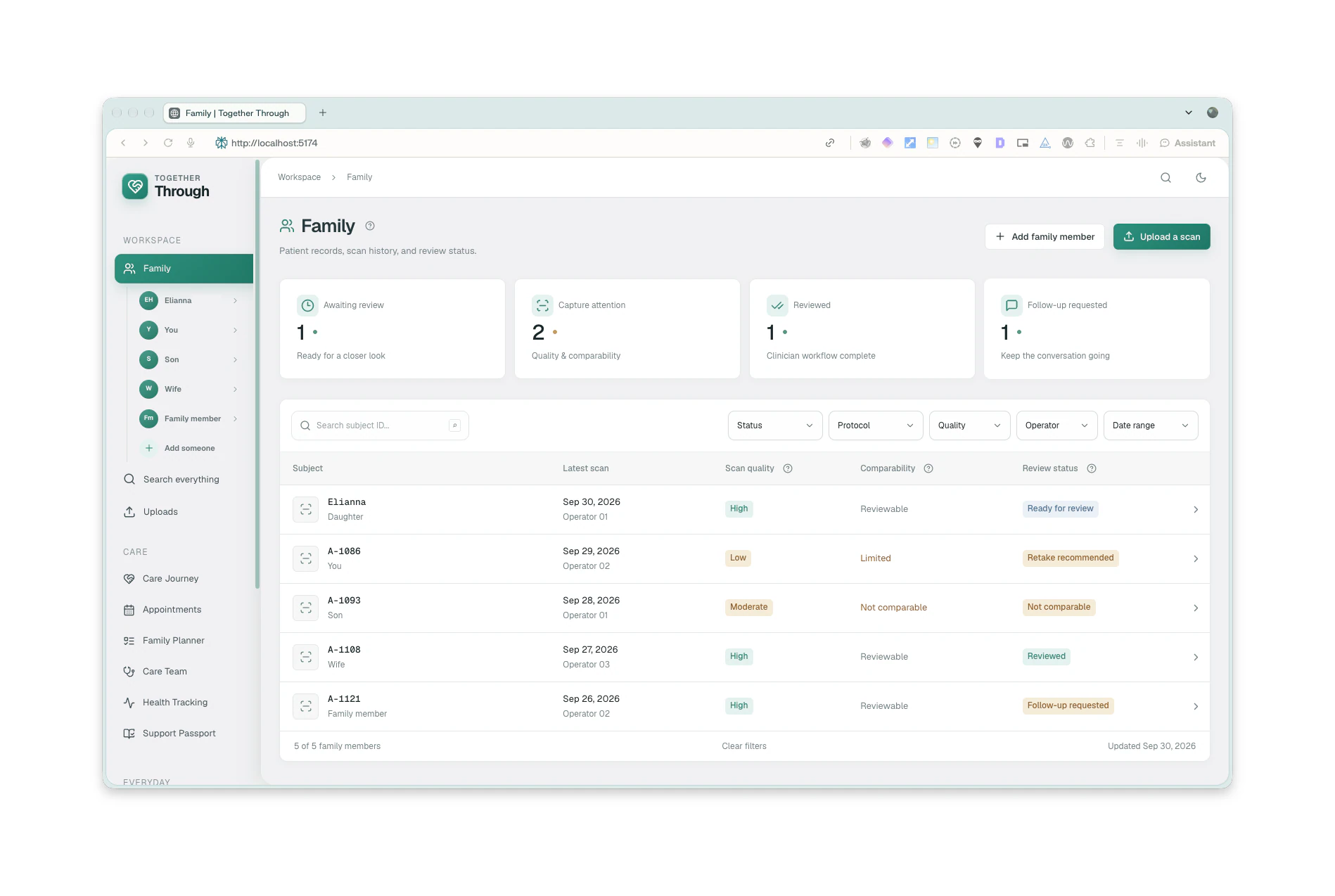
Compare, do not diagnose. Every comparison leads with scan quality and comparability, with plain statuses such as Comparable, Not comparable and Retake recommended, and no better-or-worse label. The heat map always carries a numeric scale and a legend.
Fewer dramatic visuals. Families and clinicians can trust the ones they see.
Health information about children needs more care than a typical app.
Upload files to a server from day one, or keep the prototype in the browser.
The prototype runs entirely in the browser. X-ray photos are held in memory, never uploaded or exported, and every subject is de-identified demo data.
Nothing persists between sessions yet. The privacy and security architecture comes before any real record.
Clinicians need technical detail; families need calm, bounded explanations.
One view for everyone, or separate clinical and family modes.
Separate modes. The care team reviews first, nothing reaches the family summary until it is reviewed and explicitly approved, and private notes and photos are left out.
An extra step for the care team, in exchange for no alarming surprises at home.
The work
How it was built
- 01DiscoverCalls and walk-throughs with the people who would use it
- 02CompileTranscripts, files and constraints in one requirements brief
- 03SpecifyA detailed, sourced spec from Perplexity, reviewed and locked
- 04BuildDesigned and built with the latest AI models, in the production stack
- 05TestUser testing on every preview, with real users on real tasks
- 06IterateFindings turned into the next round of changes, worst problems first
- 07ShipTests, security review and release, then back to testing and iterating↻ Back to Test
Where AI was used
Planned, within firm limits: AI may summarize reviewed data, prepare appointment questions, explain trends in plain language and coach scan quality. It will not diagnose, prescribe, change a brace, or replace an X-ray or a specialist. Coding agents helped build the prototype under the same rules as the other products.
What’s next
A design-partner pilot with a scoliosis-informed physiotherapy clinic and a brace provider, then the Family Support Passport for school, sports and caregivers.