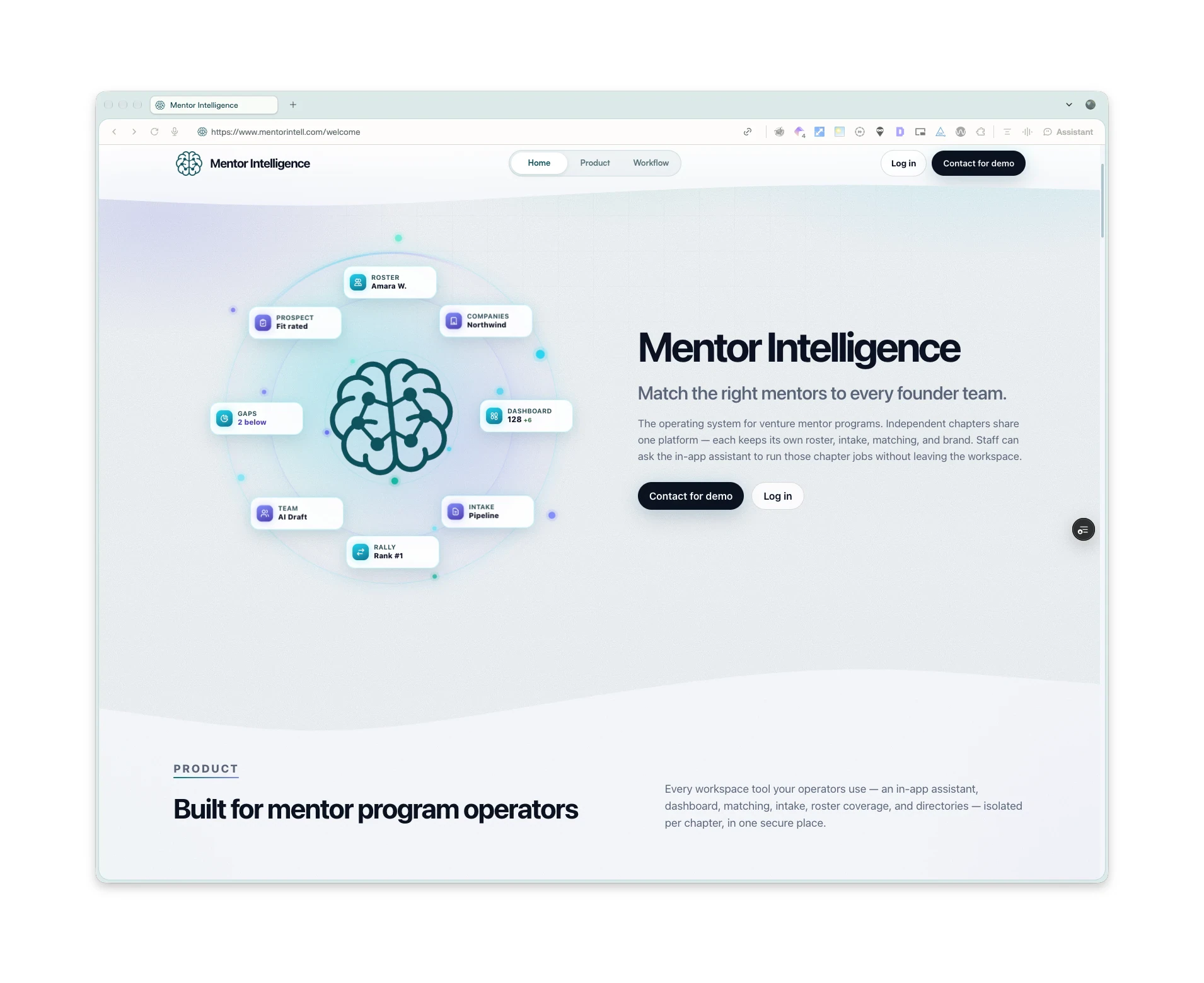
Mentor Intelligence
Match the right mentors to every founder team, chapter by chapter, on one platform.
The problem
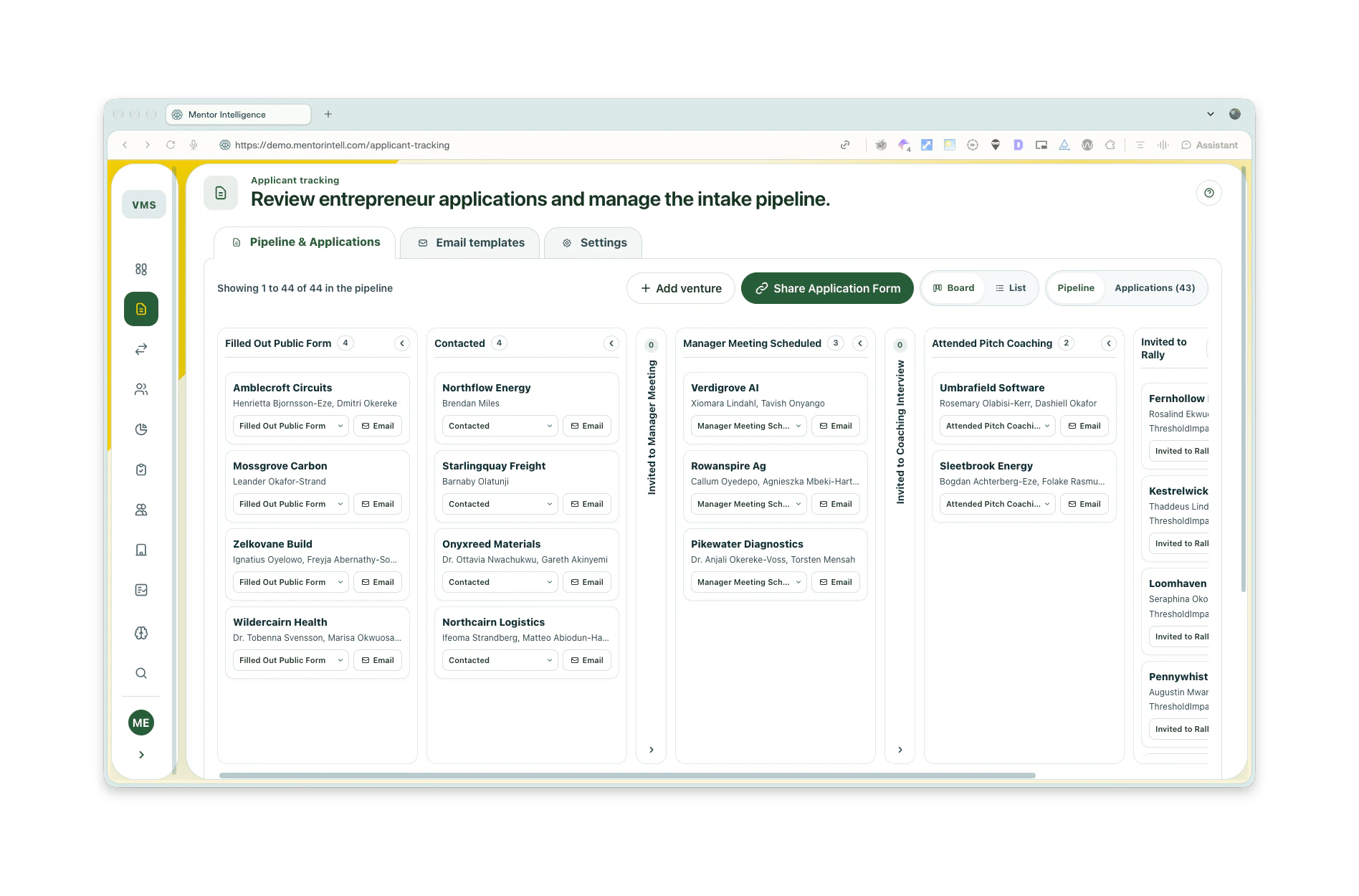
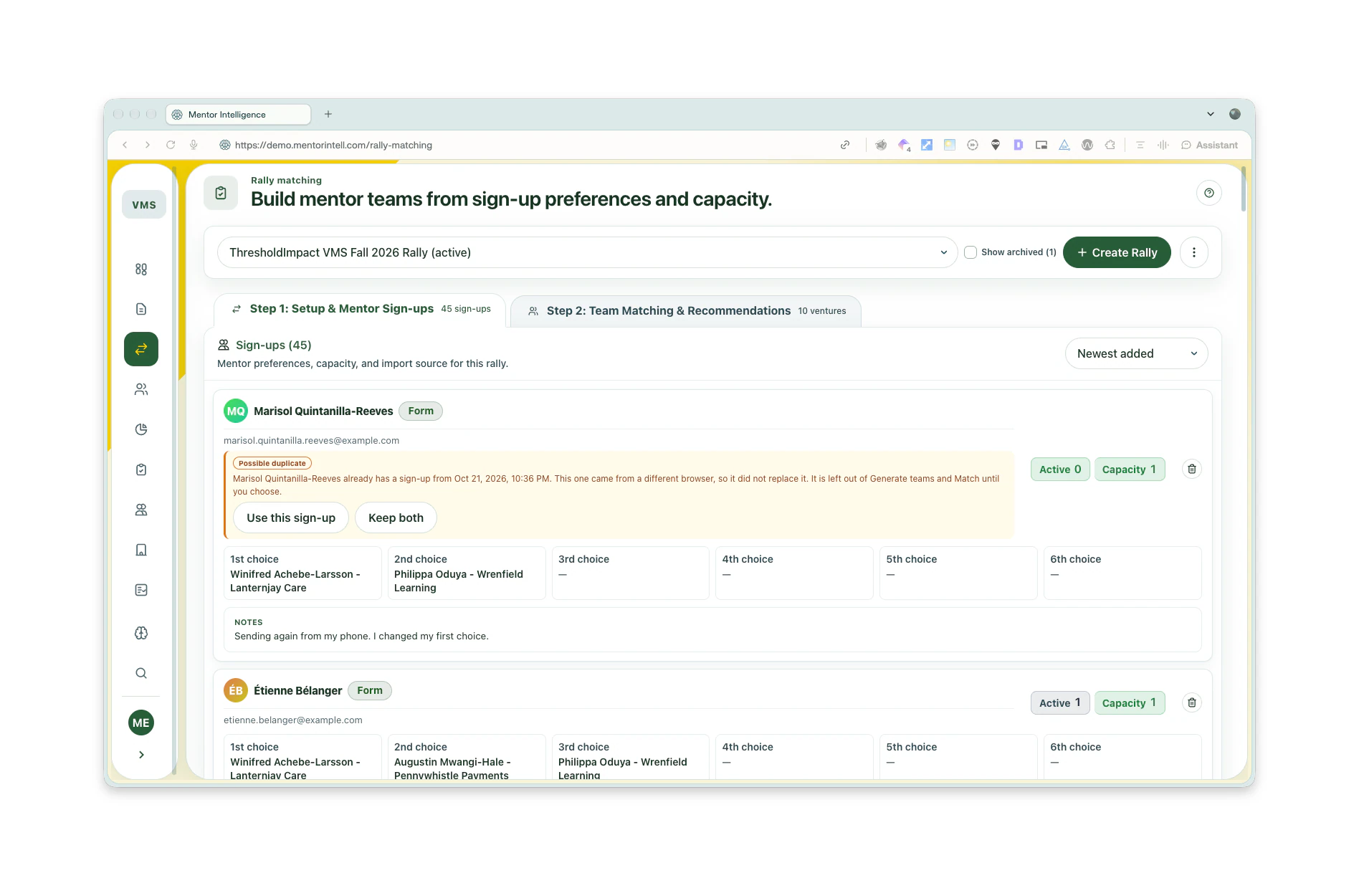
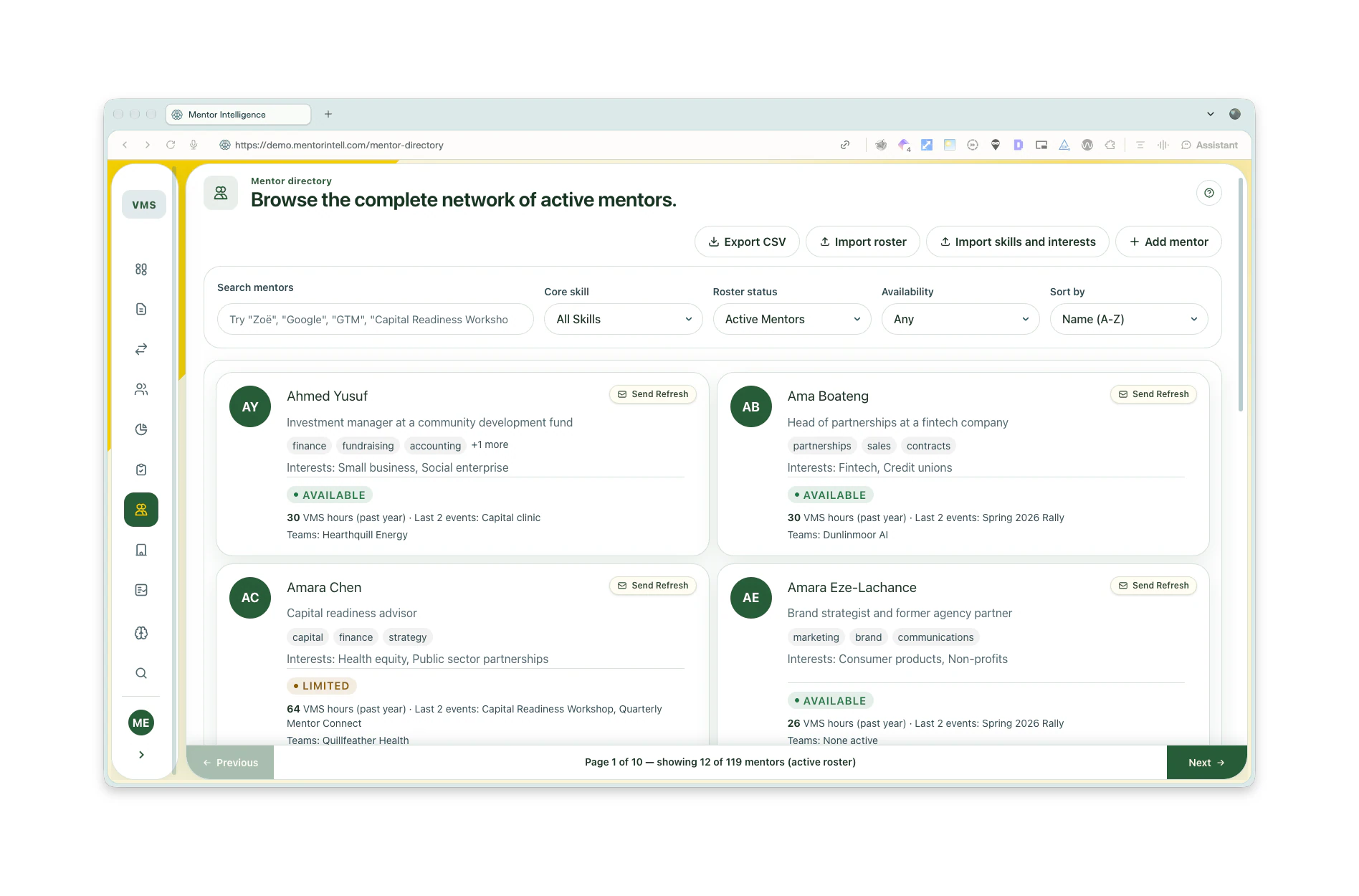
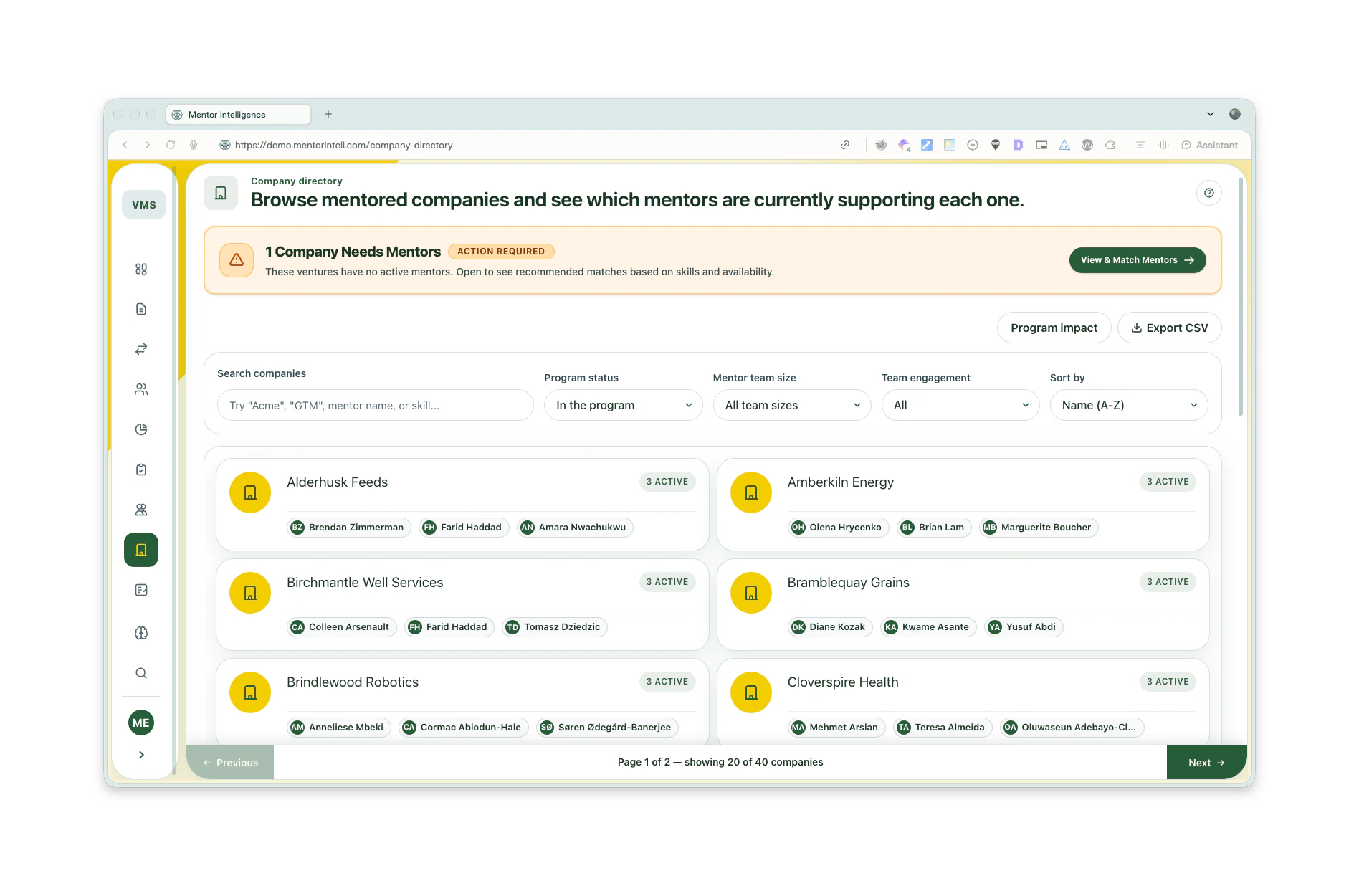
Entrepreneur-support chapters run mentor programs on spreadsheets, email and a generic CRM. Applicants live in one sheet, mentors in another, and the three-mentor team for each founder gets assembled from memory.
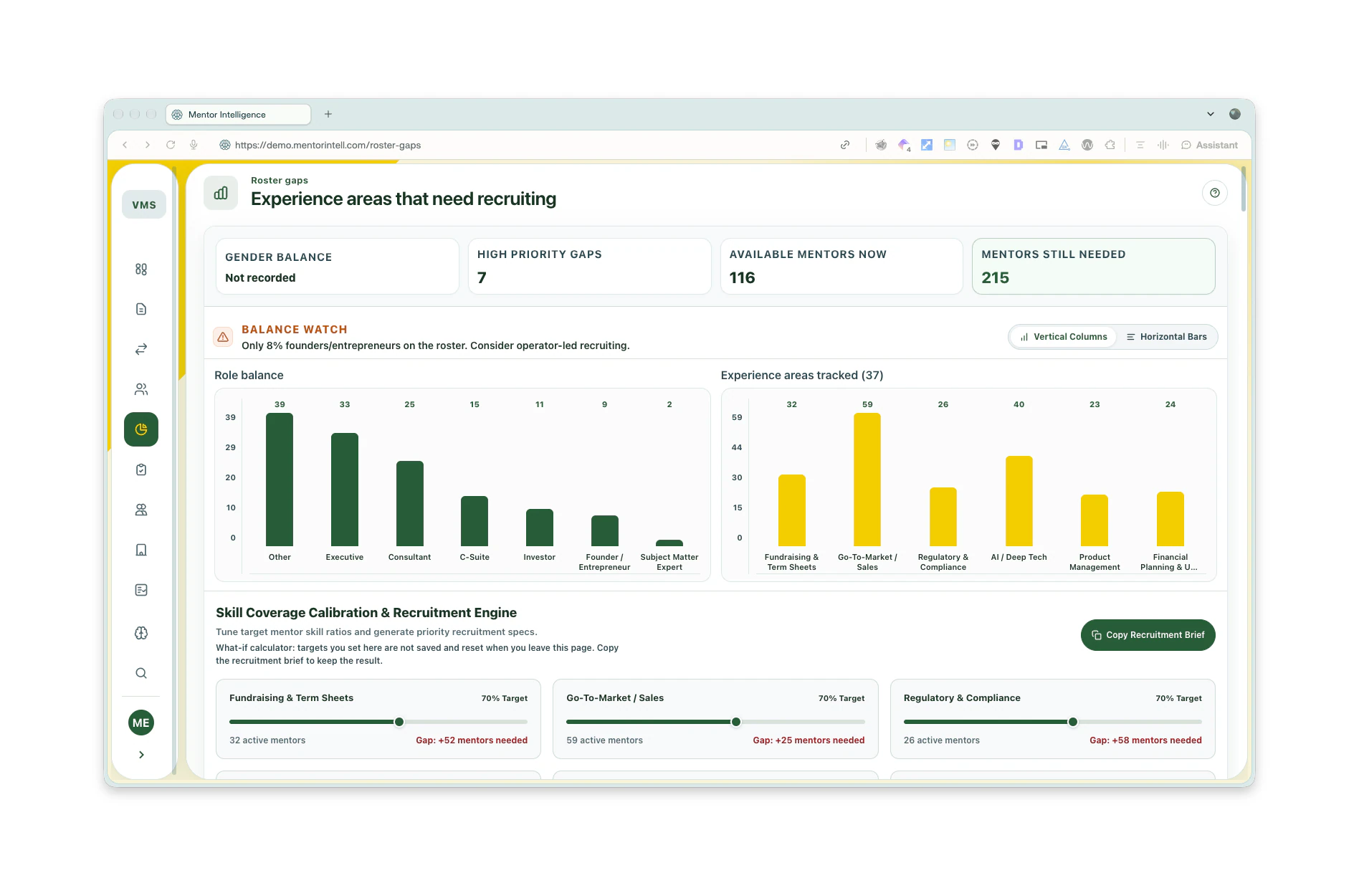
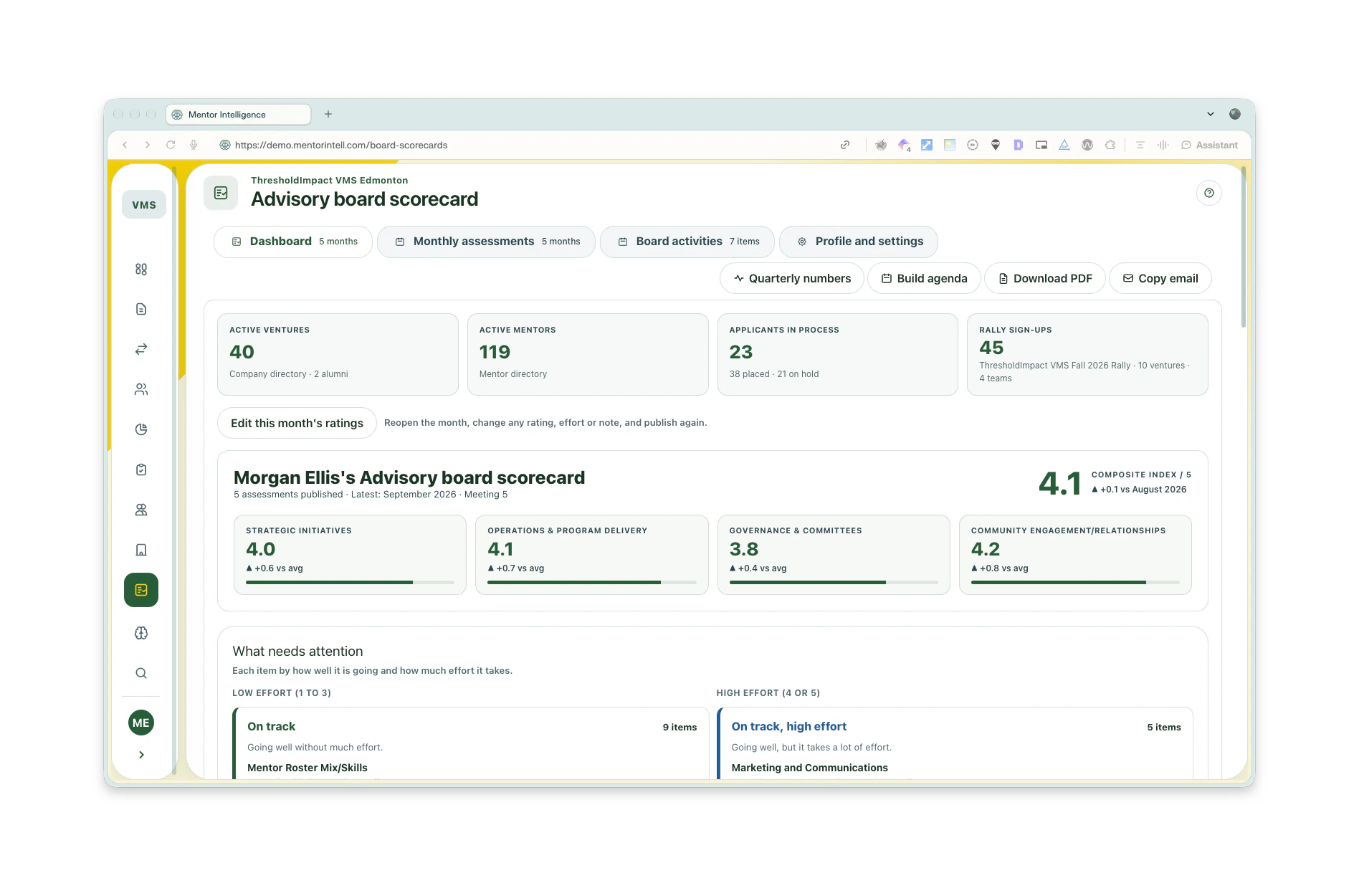
Staff needed one place to track applicants, keep the roster current, see where the roster is thin, and build the right team for each pitch. A network of 130+ chapters needed the same product to work per chapter without any data crossing between them.
Key decisions
A working static prototype already existed and chapters wanted it live fast.
Keep extending the prototype; rebuild on a full stack in one go; or port it in steps.
A seven-step migration to Next.js and Supabase, each step shippable: shell and navigation, ported pages, typed models and seed data, real persistence with RLS, server-side AI, role-based visibility, then tests and CI.
A slower first week. In return, auth, persistence and row-level security were in place before the first real user.
Chapters must never see each other’s data, and each wants its own brand.
One deployment per chapter, or one app with tenancy on every row.
One app, one database. Every operational row carries an org id, RLS enforces it, feature flags and theme tokens brand each chapter, and a signed-in user with no membership sees nothing until invited.
Every query carries tenancy and a single mistake could leak, so RLS is tested in CI rather than trusted.
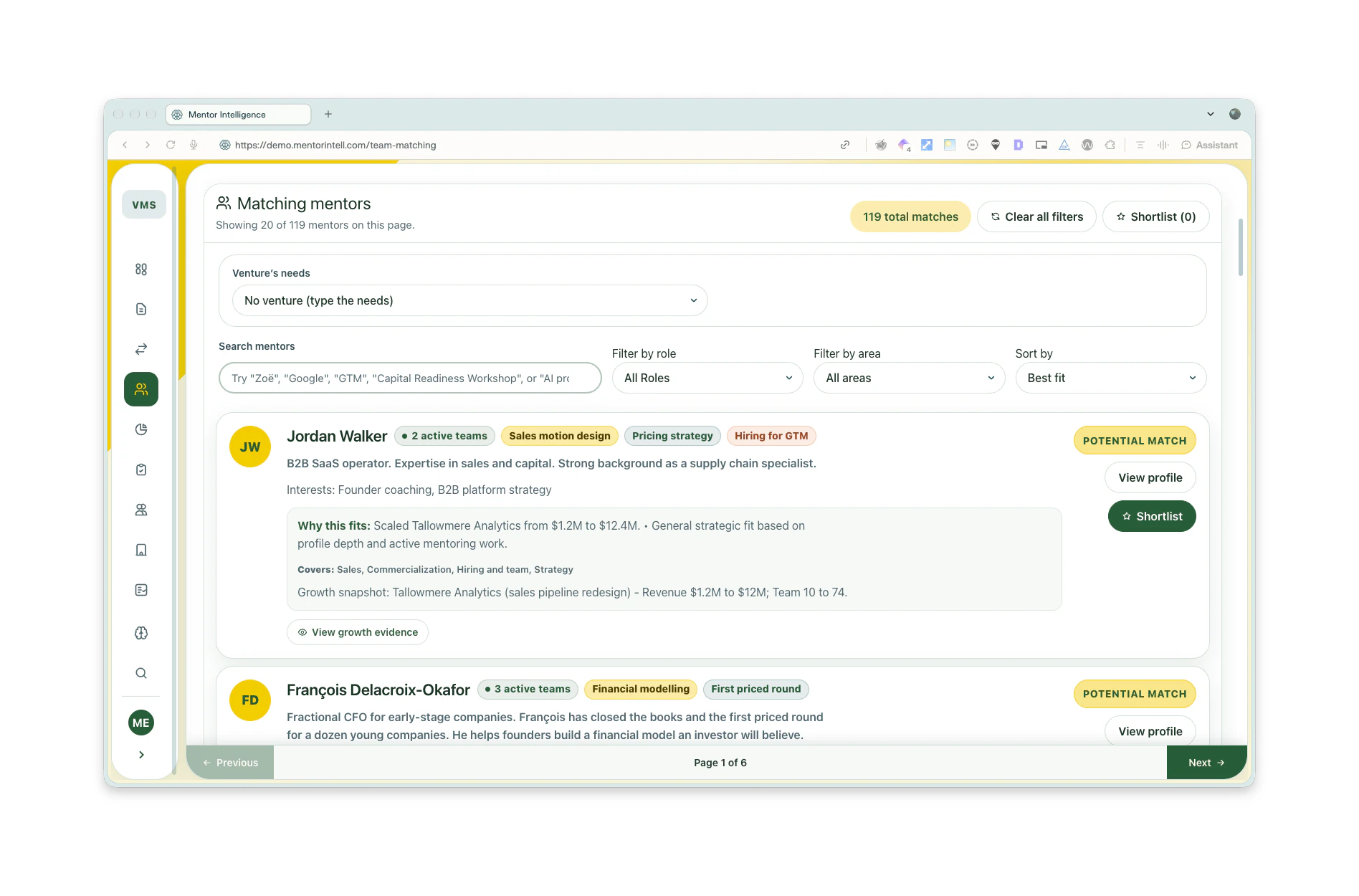
AI should help staff build teams without inventing facts or writing data on its own.
Let the model act on records directly, or keep it advisory.
AI runs server-side and only for staff and admins. Pitch needs are extracted from the founder’s video or document and shown for editing. The in-app assistant acts as the signed-in staff member, and only after they confirm the listed steps.
More clicks per task. Every change traces to a person, which is what a program director has to be able to say.
The work
How it was built
- 01DiscoverCalls and walk-throughs with the people who would use it
- 02CompileTranscripts, files and constraints in one requirements brief
- 03SpecifyA detailed, sourced spec from Perplexity, reviewed and locked
- 04BuildDesigned and built with the latest AI models, in the production stack
- 05TestUser testing on every preview, with real users on real tasks
- 06IterateFindings turned into the next round of changes, worst problems first
- 07ShipTests, security review and release, then back to testing and iterating↻ Back to Test
Where AI was used
Gemini watches a pitch video and writes the transcript; a summarizer turns it into needs that staff edit before anything is saved. The model never writes to the database. Coding agents work under a written constitution: no production data, preview before production, public claims need evidence.
What’s next
Company workspaces for firms that run their own mentoring, and a venture’s dated track record across Launching OS, Mentor Intelligence and funding.