BackTrack
Know exactly when to start.
The problem
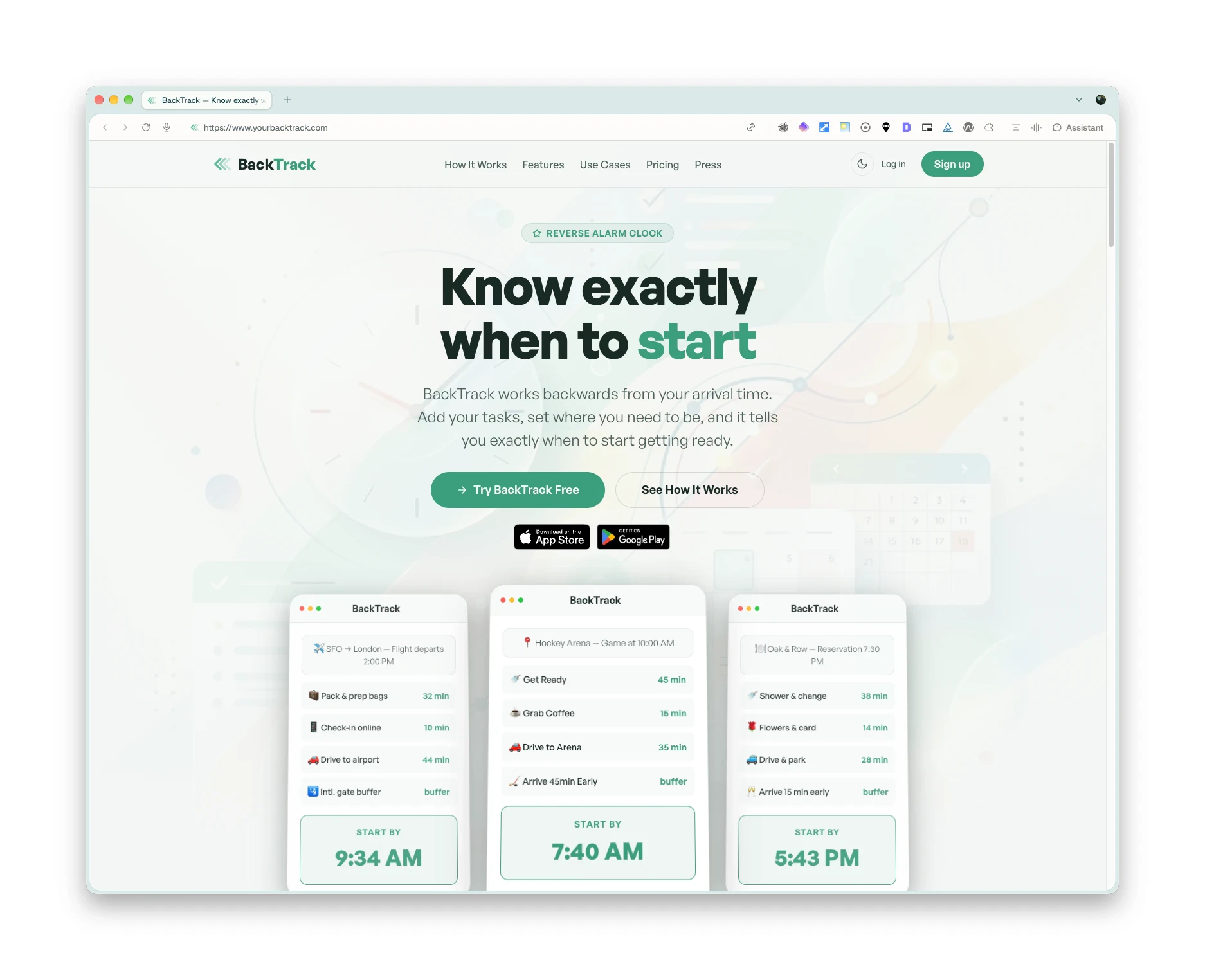
Alarm clocks answer the wrong question. A sports parent with a 10:00 AM game, a traveler with a 2:00 PM flight or a commuter with a fixed train does not need to know when to wake up. They need to know when to start, and working backwards through prep, buffers and drive time by hand is the overhead BackTrack removes.
Key decisions
The product sits between alarms, habit trackers and calendars, and could be mistaken for any of them.
Call it a smarter alarm, or name a new category.
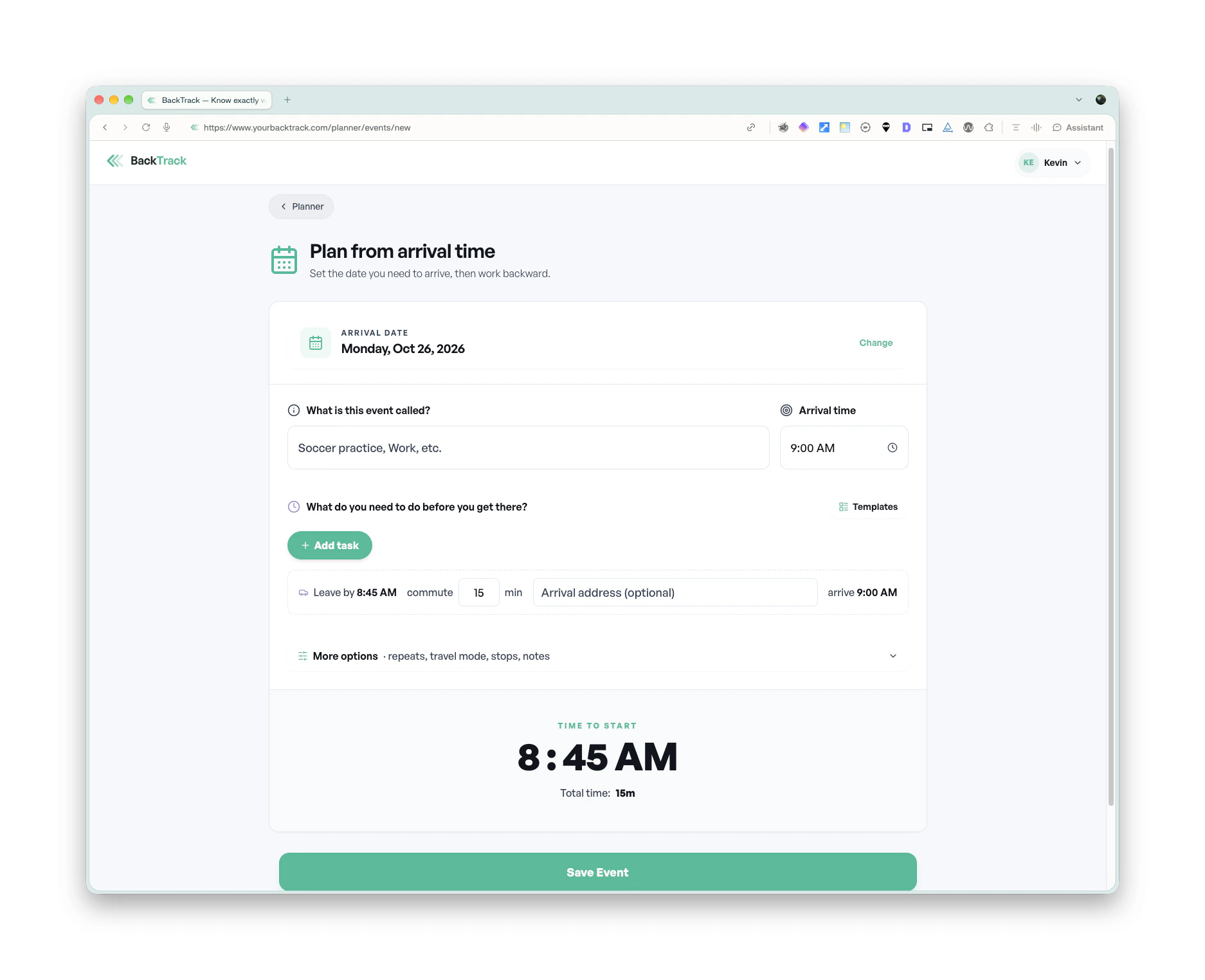
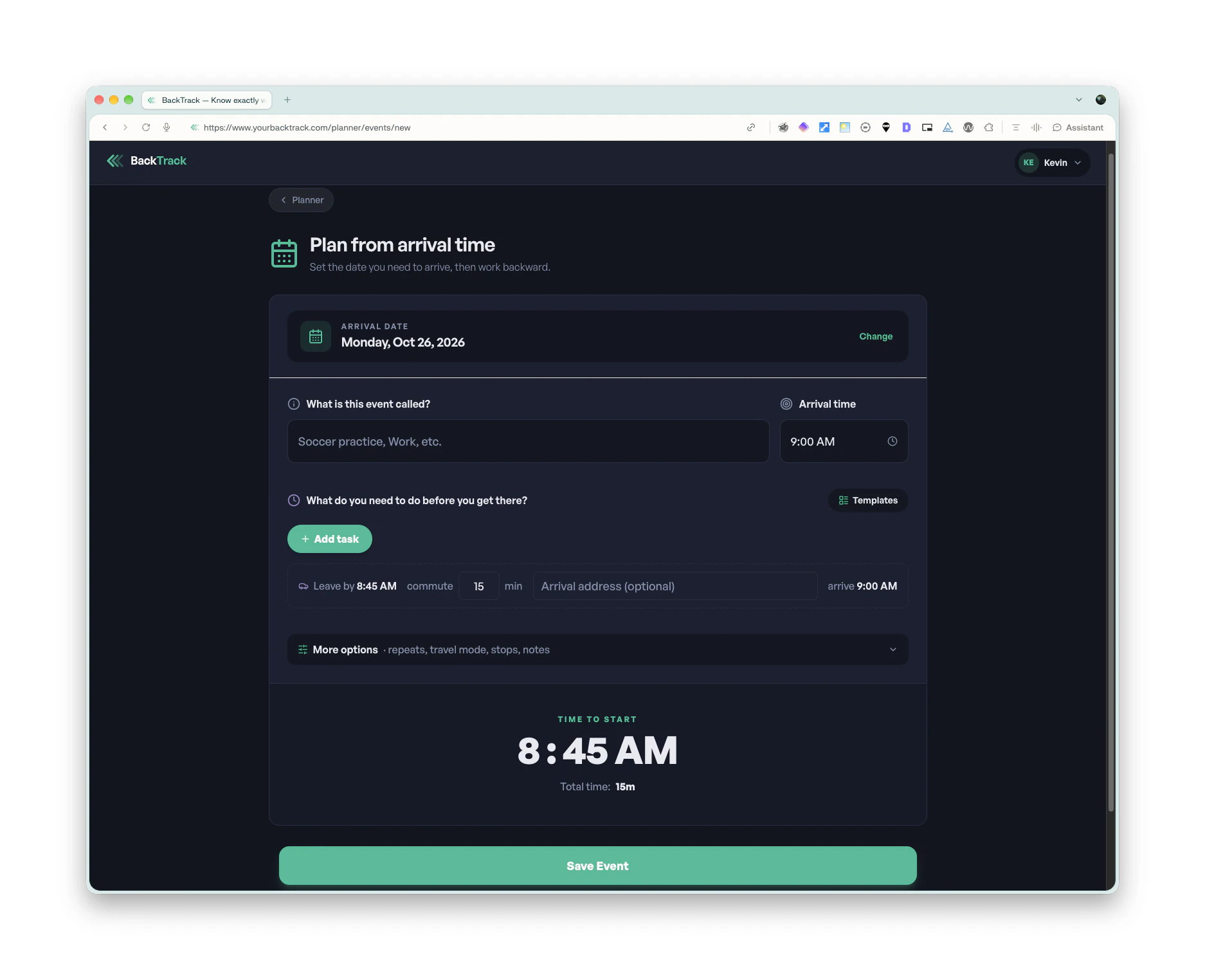
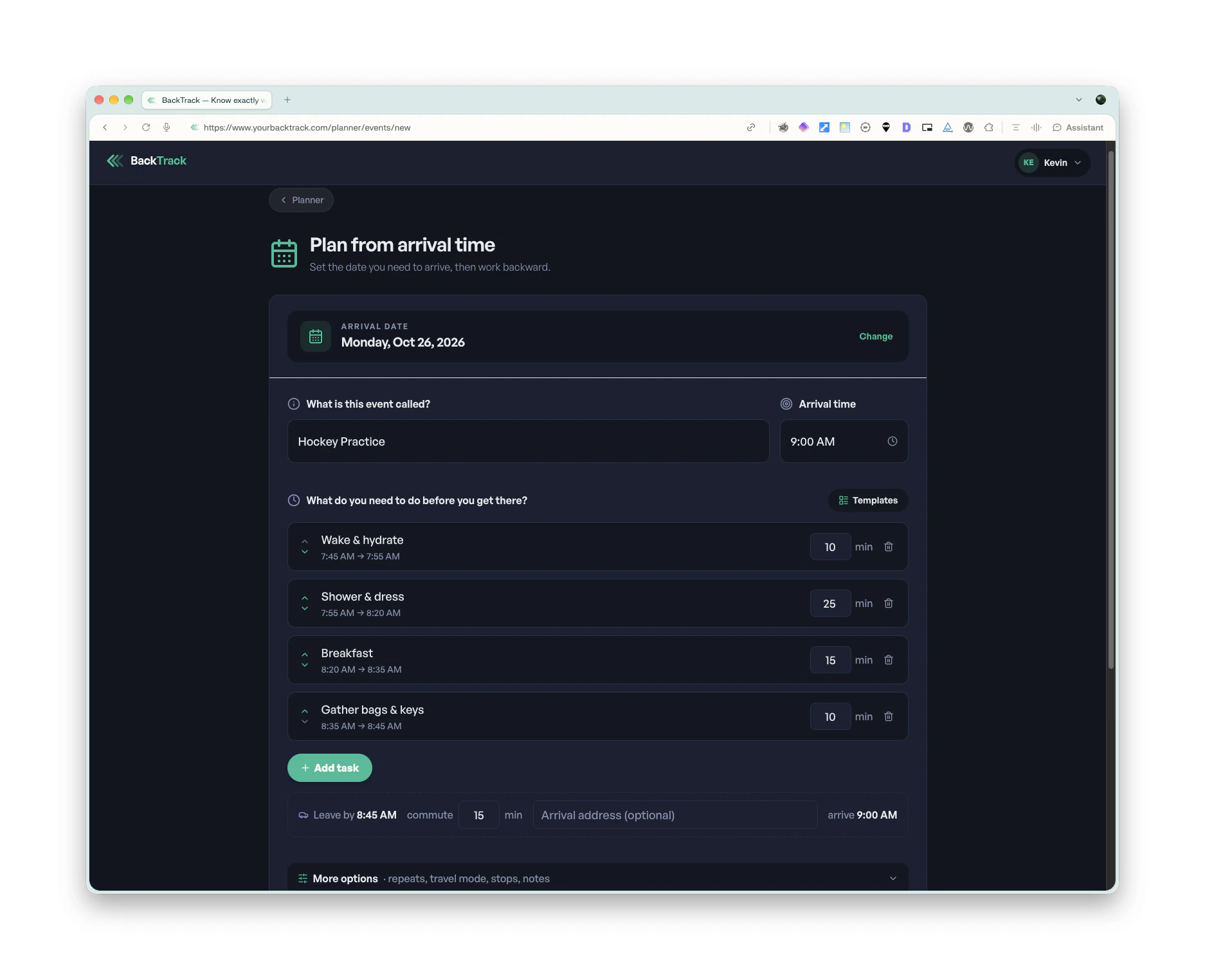
An arrival-time planner. The copy, the onboarding and the templates all start from the arrival, never from the wake-up.
A category people have to learn. The tagline carries it.
It has to work on a phone at 6 AM and on a watch in a parking lot.
Native apps per platform, or one shared codebase.
Expo for iOS, Android and web from one codebase, with Apple Watch and Wear OS companions, home-screen widgets, and an MCP server so AI assistants can answer the leave-by question with BackTrack’s math.
Fewer platform-specific flourishes. Far less to maintain alone.
The work
How it was built
- 01DiscoverCalls and walk-throughs with the people who would use it
- 02CompileTranscripts, files and constraints in one requirements brief
- 03SpecifyA detailed, sourced spec from Perplexity, reviewed and locked
- 04BuildDesigned and built with the latest AI models, in the production stack
- 05TestUser testing on every preview, with real users on real tasks
- 06IterateFindings turned into the next round of changes, worst problems first
- 07ShipTests, security review and release, then back to testing and iterating↻ Back to Test
Where AI was used
The spec and design system were drafted with AI assistance. In the product, the MCP server lets assistants use BackTrack’s calculator rather than guess.
What’s next
Wearable companions and widgets.