Lift
Complete structural steel takeoffs in minutes, not hours.
The problem
Structural steel estimating teams count beams, columns, bolts and connections by hand from multi-page PDF drawings. It is slow, repetitive and error-prone, and the estimate is only as good as the count.
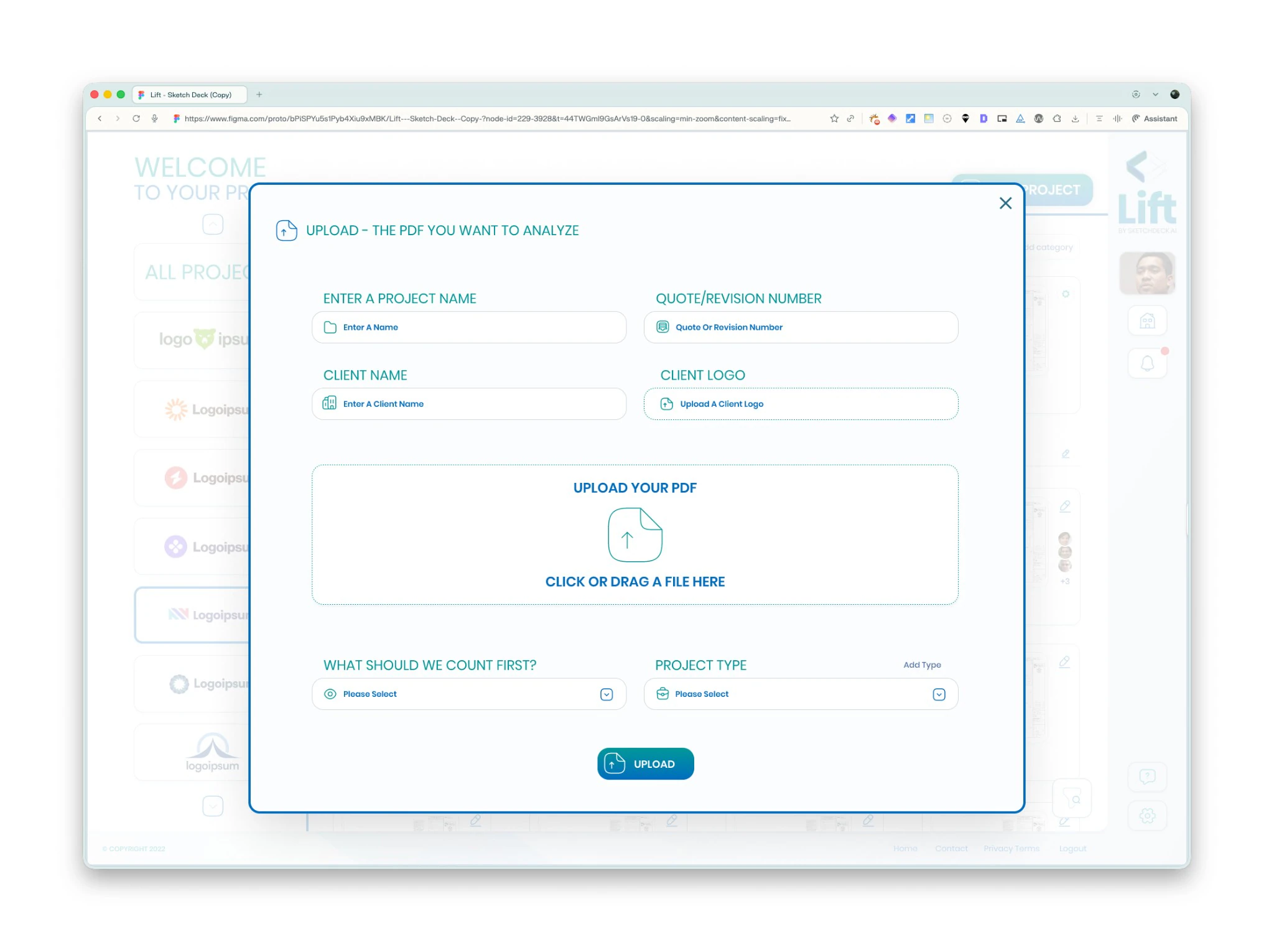
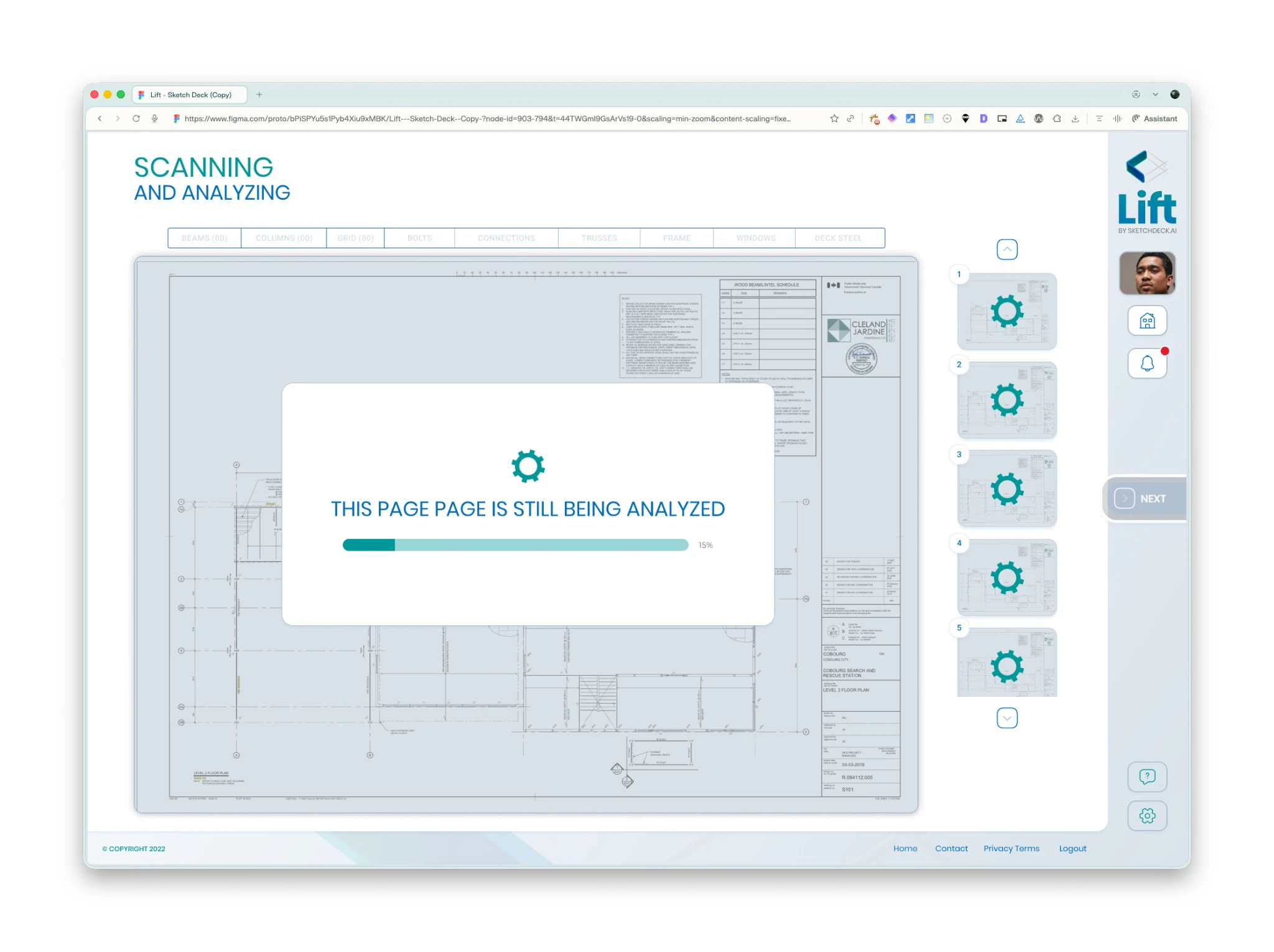
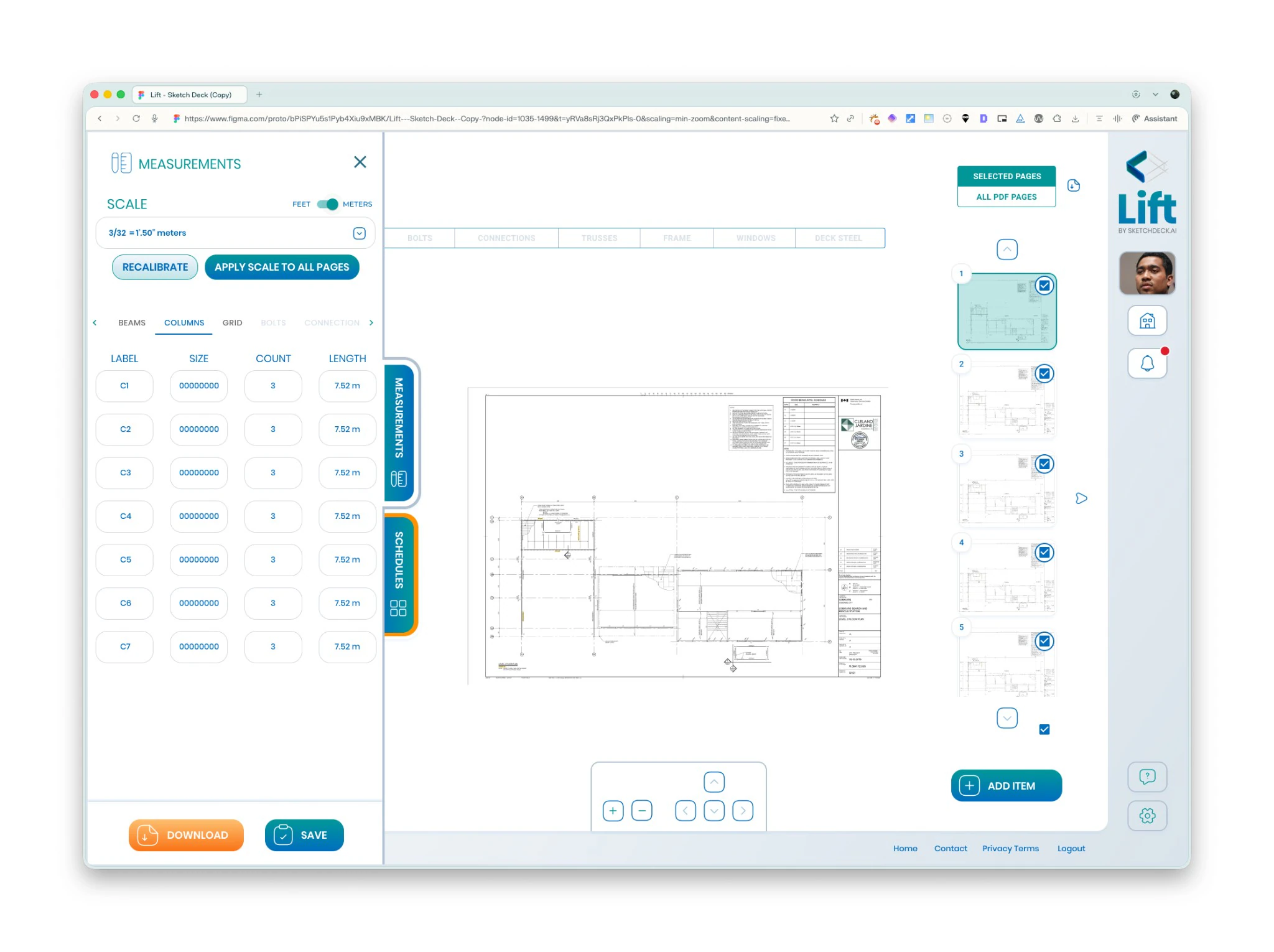
Lift uploads the drawings, analyzes and quantifies the members, and gives the estimator a measurements panel to review and export.
Key decisions
An estimator will not sign off on a count they cannot check.
Auto-commit the AI count, or make confirmation the core loop.
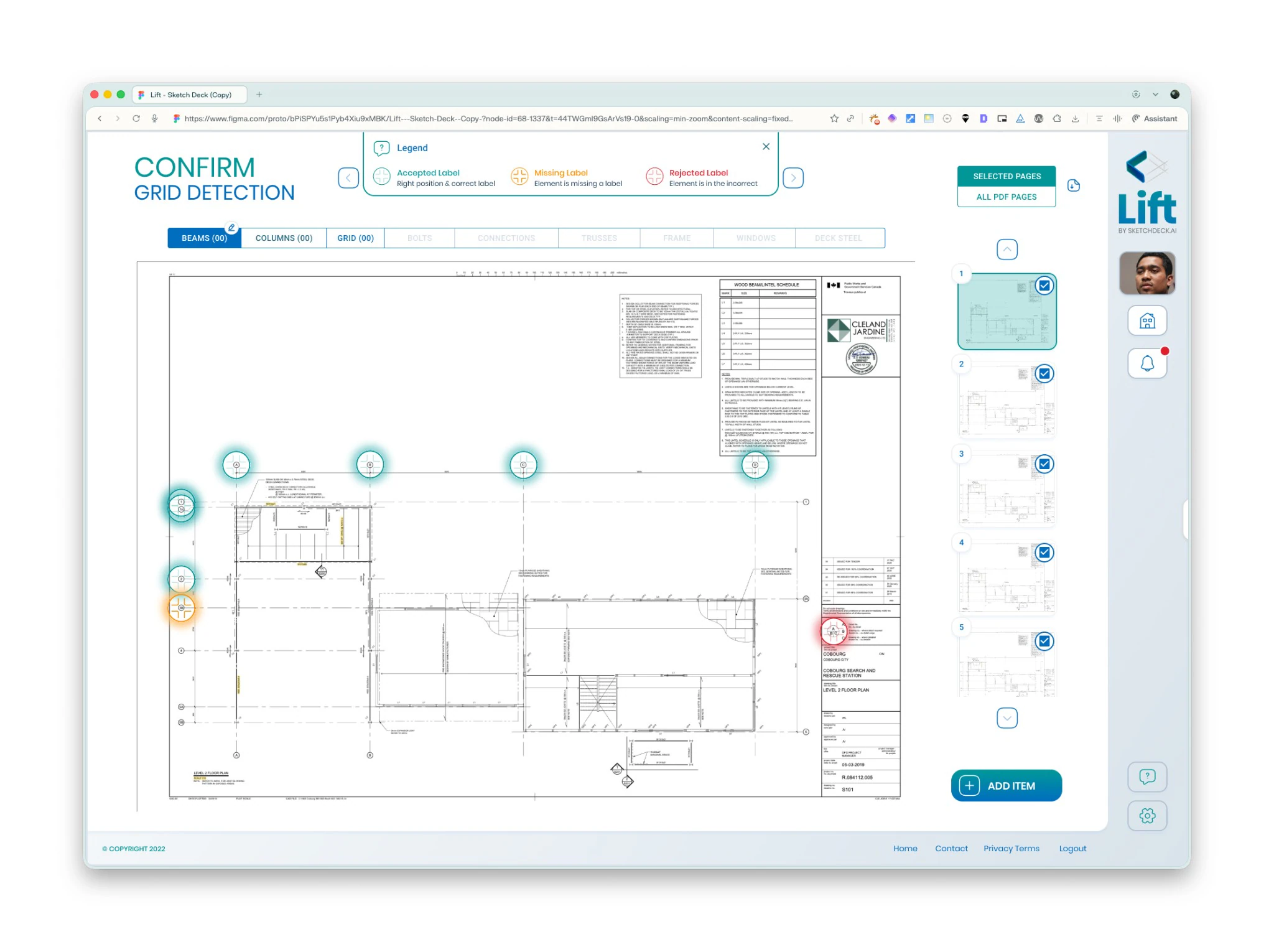
Detected elements are shown as accepted, missing or rejected labels for the estimator to confirm, page by page, before anything is counted.
Slower than fully automatic. Trusted, which is what gets it used.
Real drawing sets are many pages at different scales.
One page at a time, or a project-level workflow.
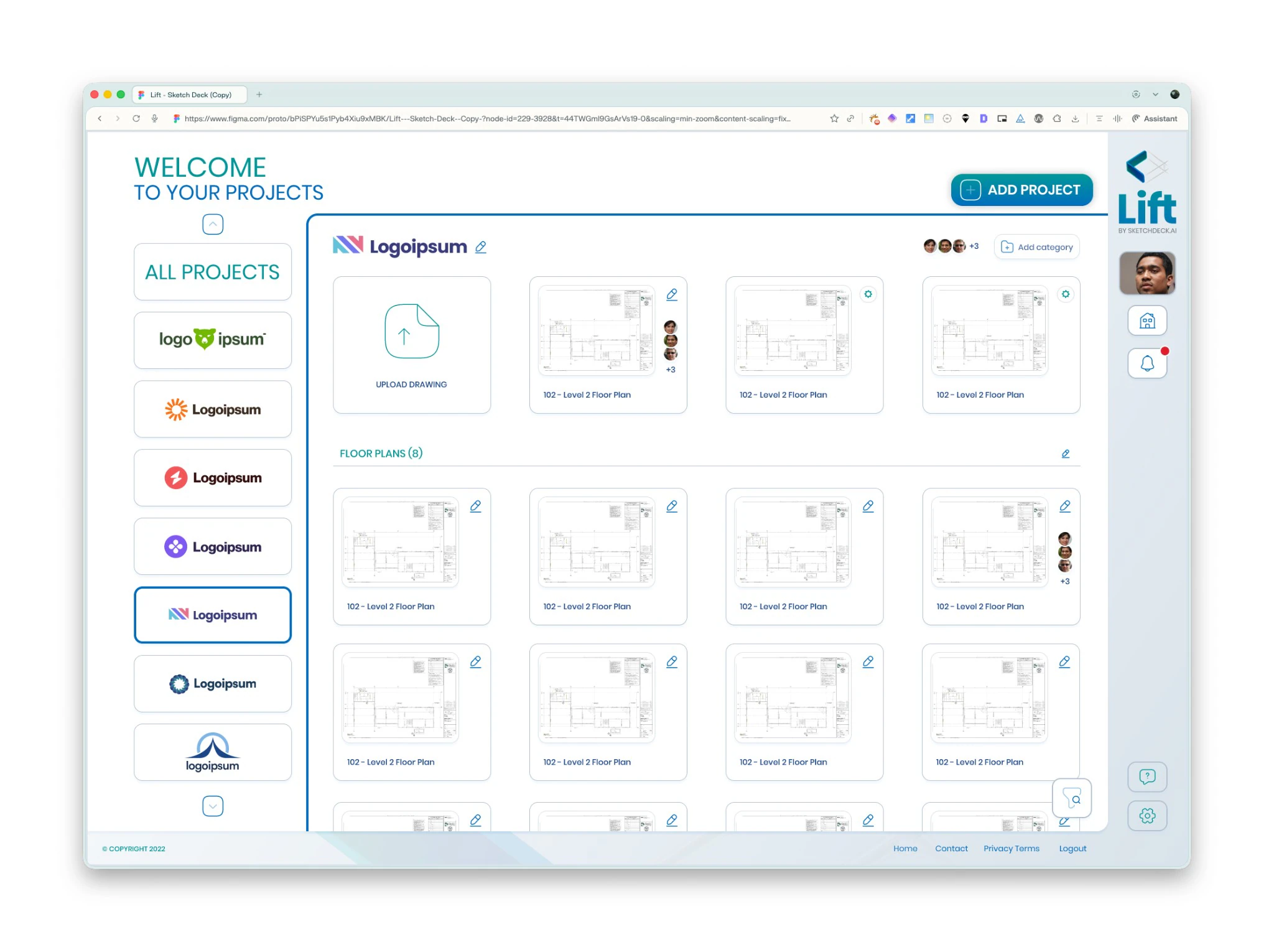
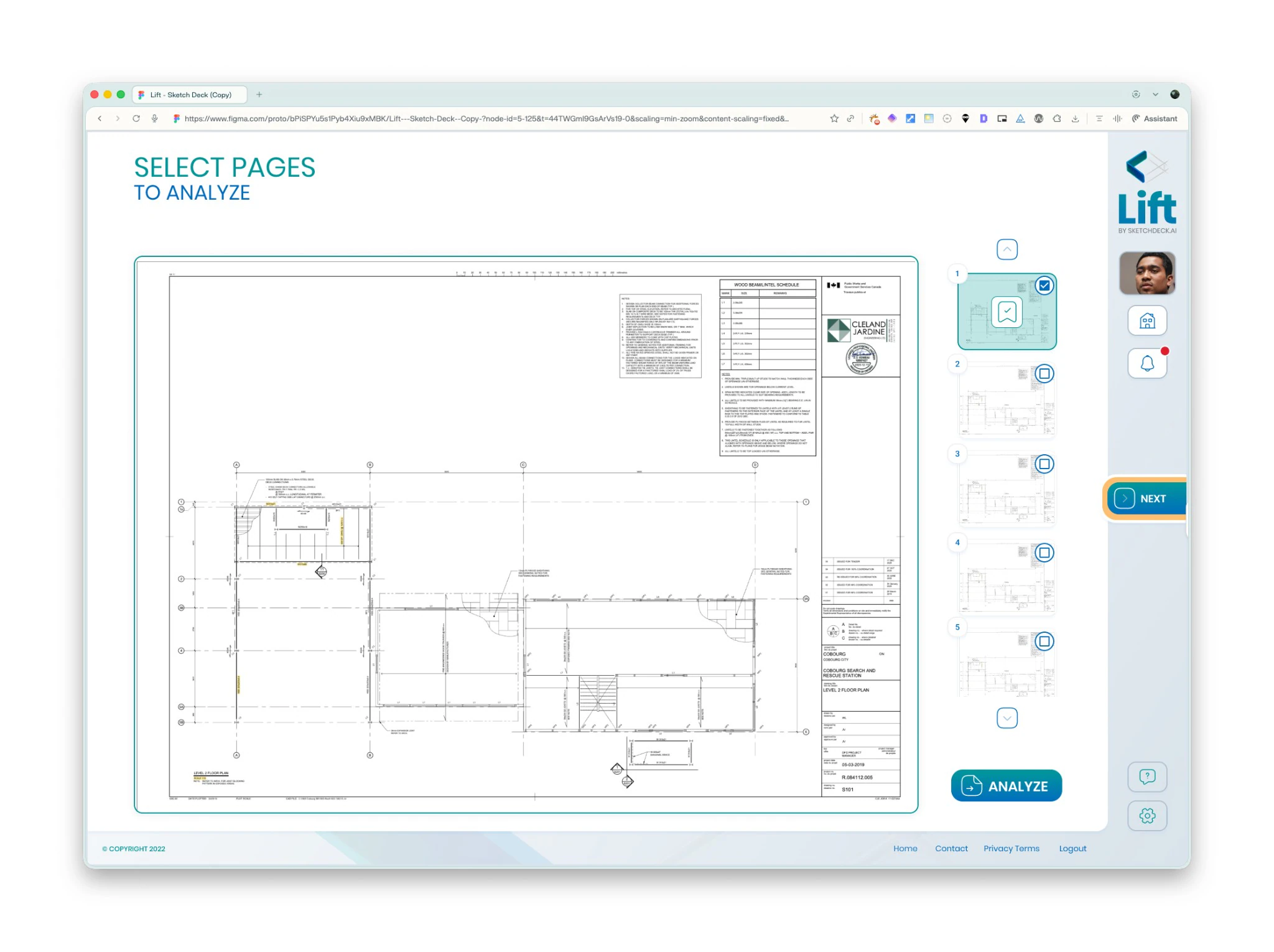
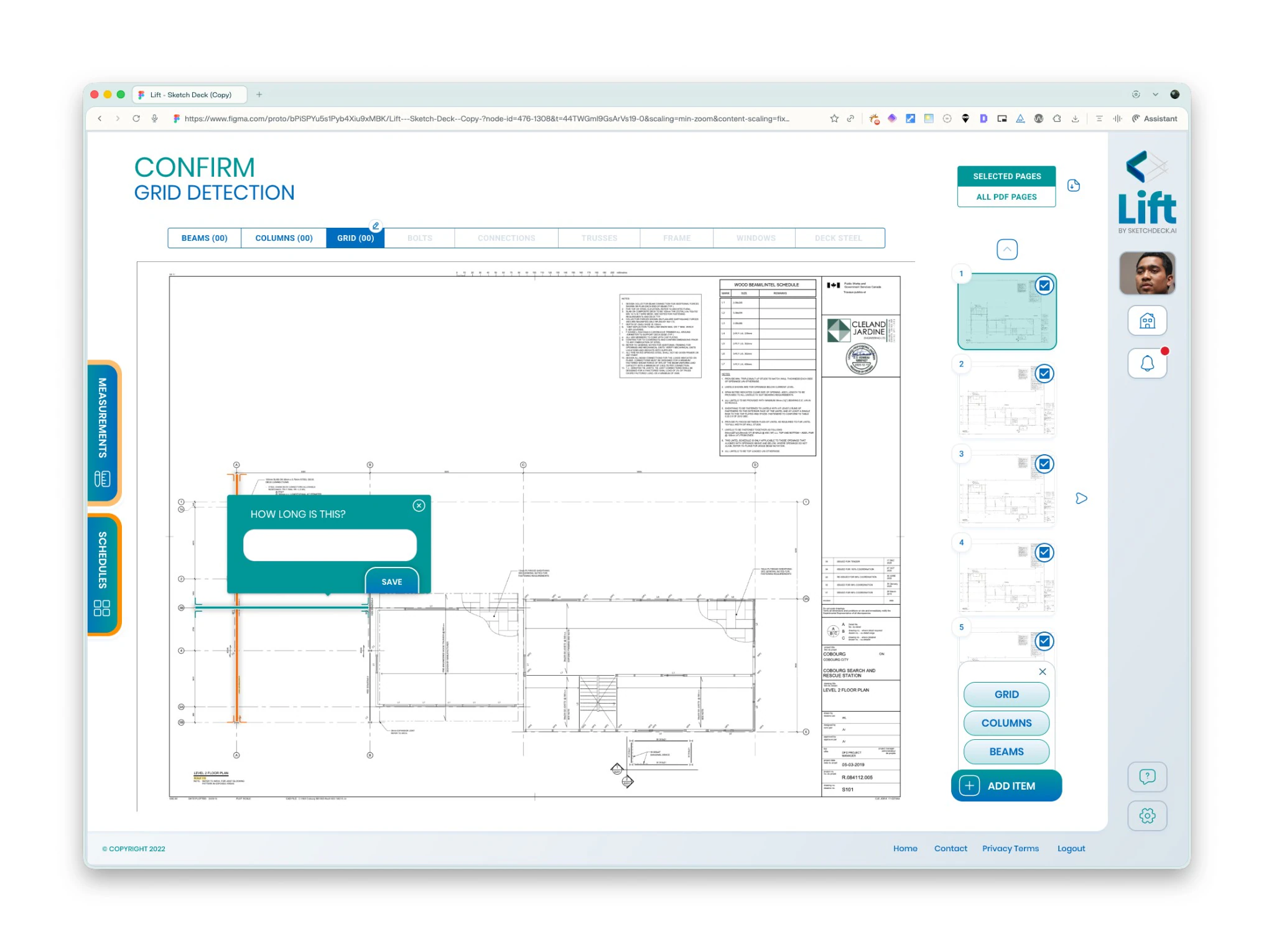
Projects hold drawings and floor plans; the user selects pages to analyze, sets scale and calibration once, applies it across pages, then iterates with add and edit.
More setup up front, less rework later.
The work
Where AI was used
The product is AI detection with human confirmation. Design work was done in Figma.