DamGuard
Turn scattered dam-safety evidence into regulator-ready reports a Recognised Engineer can sign.
The problem
Dam owners in New Zealand must certify dam safety every year, and the evidence lives in PDFs, consultant reports, SCADA exports, Maximo work orders and spreadsheets. Each certificate is a manual stitch, and when the Recognised Engineer asks “show me where,” the answer is a folder of documents.
DamGuard is the compliance operating layer: a system of record for how regulations map to evidence, how deficiencies get closed, and how reports get signed off. It starts document-first for operators with low data maturity and grows into live connectors without changing the report target.
Key decisions
Most operators are not ready for systems integration; their evidence is documents, procedures and logs.
Require PI, Maximo and civil database connectors first, or start from the documents people already have.
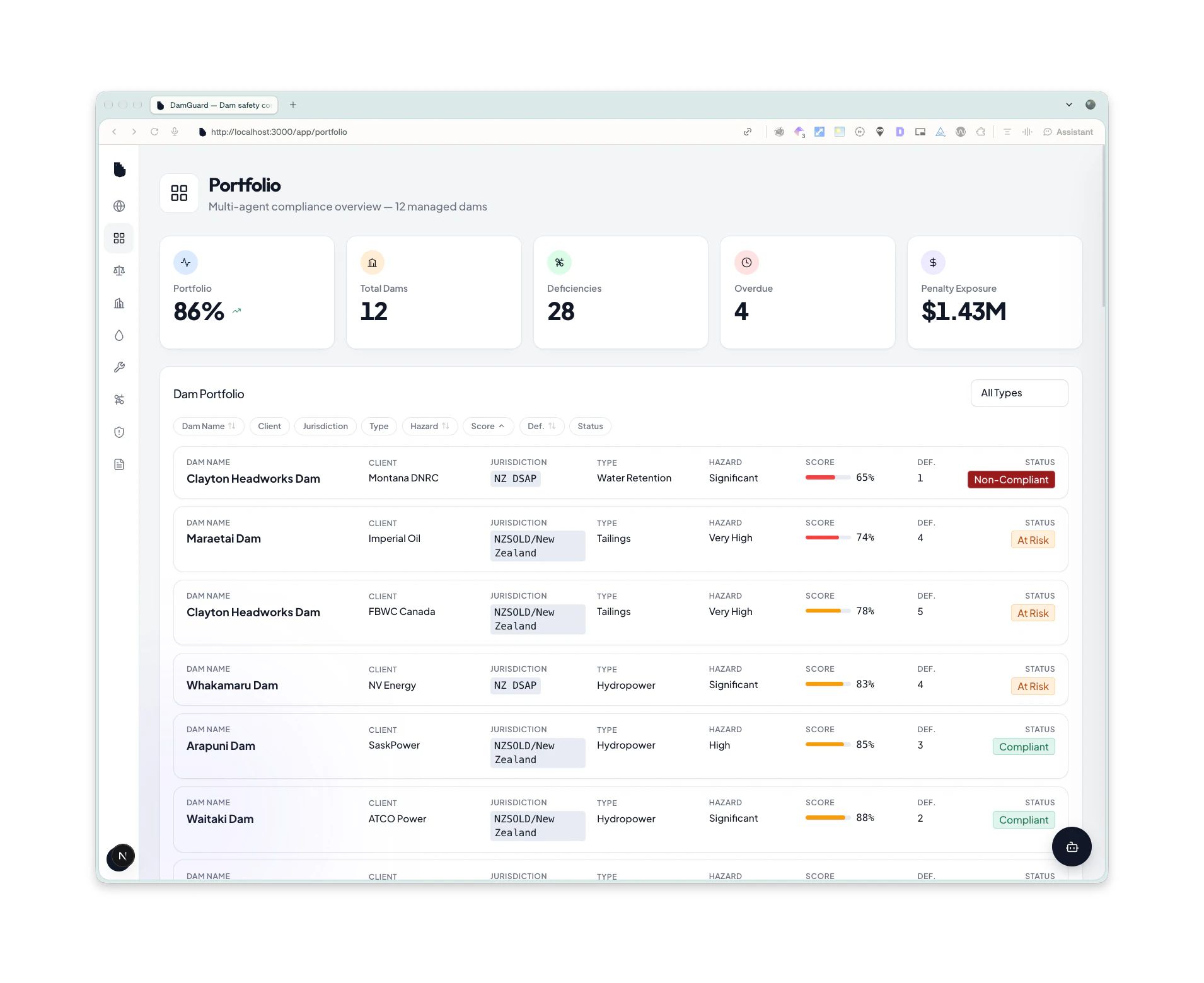
Document-first entry: an evidence hopper, a requirement-to-evidence mapping table, and the same regulator-ready report schema whether evidence arrives by upload or by connector.
Manual mapping in the first cycle. In return, a product a low-maturity operator can adopt this year.
Foundation models will make “map this PDF to Reg 14” a commodity.
Ship a prompt wrapper, or build the workflow and data that outlive the model.
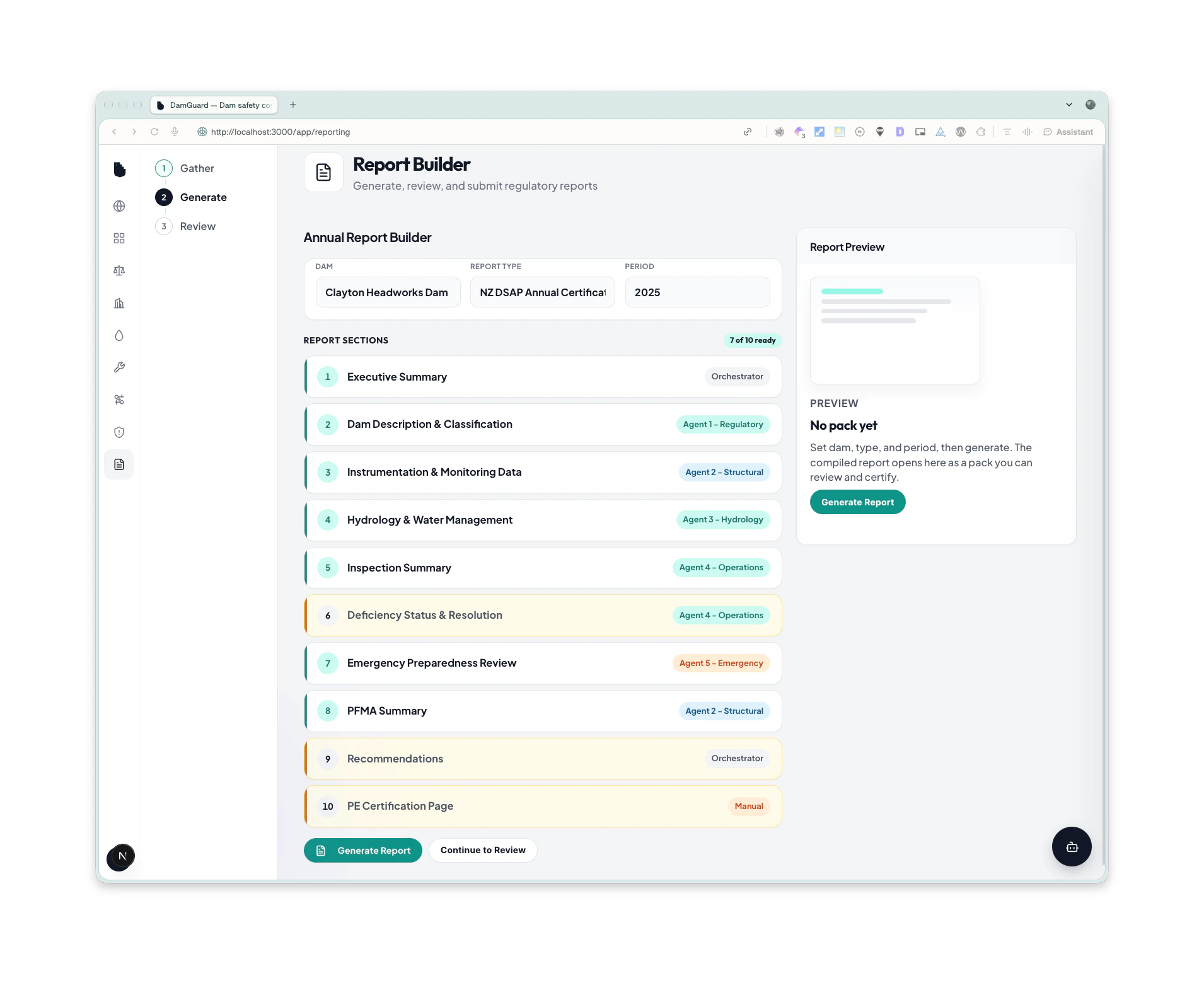
A multi-step pipeline: ingest, map with rationale and confidence, engineer accept, reject or override, sign off, archive. Every decision is appended to an immutable audit trail, and prior-cycle decisions are suggested the next year.
Slower to build than a chat box. It is also what a generic copilot cannot replace.
A regulator accepts a Recognised Engineer’s signature, not an AI’s.
Auto-generate certificates, or keep humans at every gate.
AI drafts, people sign. Role-based access for engineer, signatory, viewer and admin, TOTP multi-factor auth for admins, row-level security per tenant, and no auto-submission to the regulator.
More steps per cycle. Every claim in a report traces to a source and a reviewer.
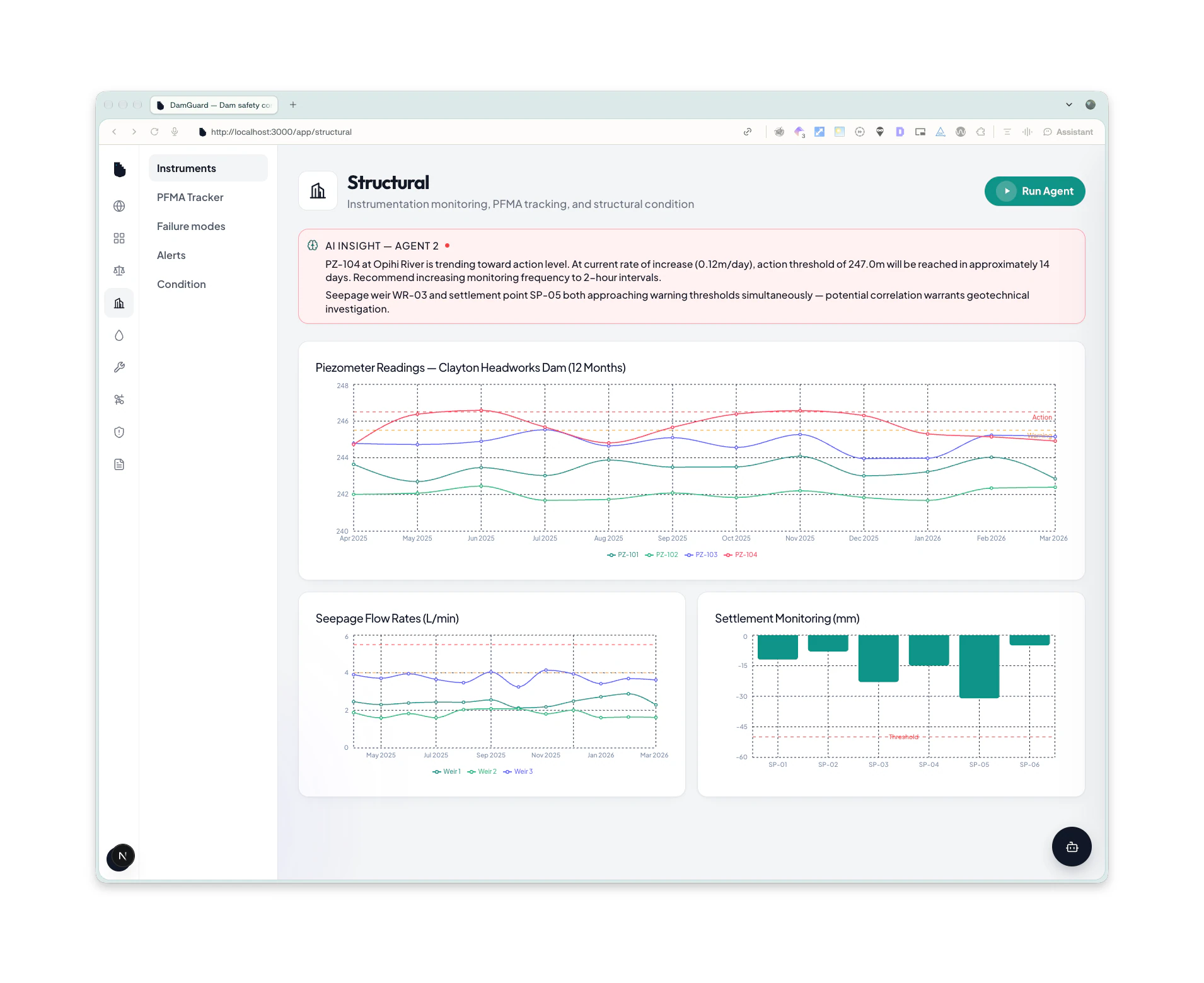
Reviewers could not connect piezometers, seepage and surveillance readings to the asset they were certifying.
More tables and charts, or spatial context.
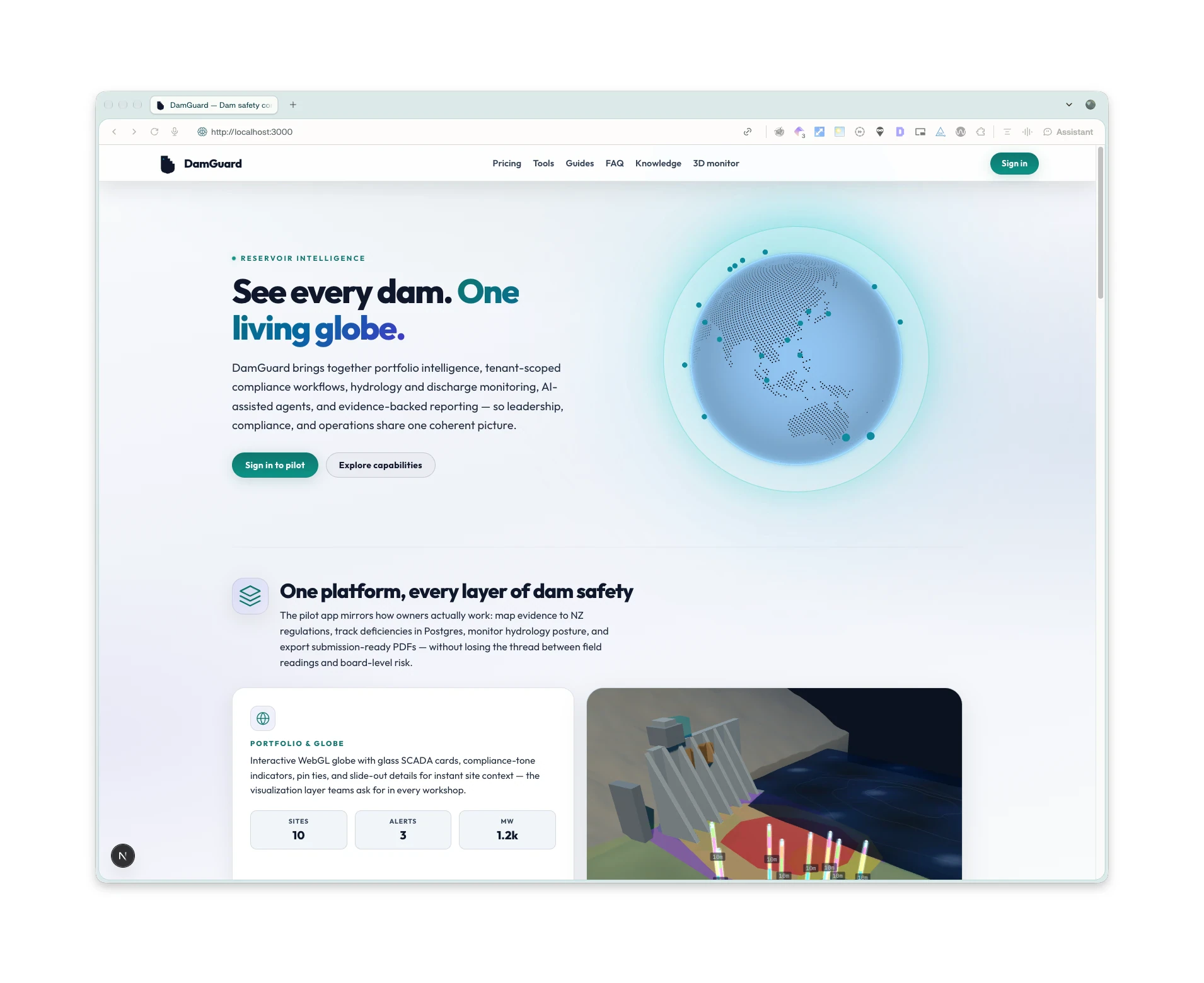
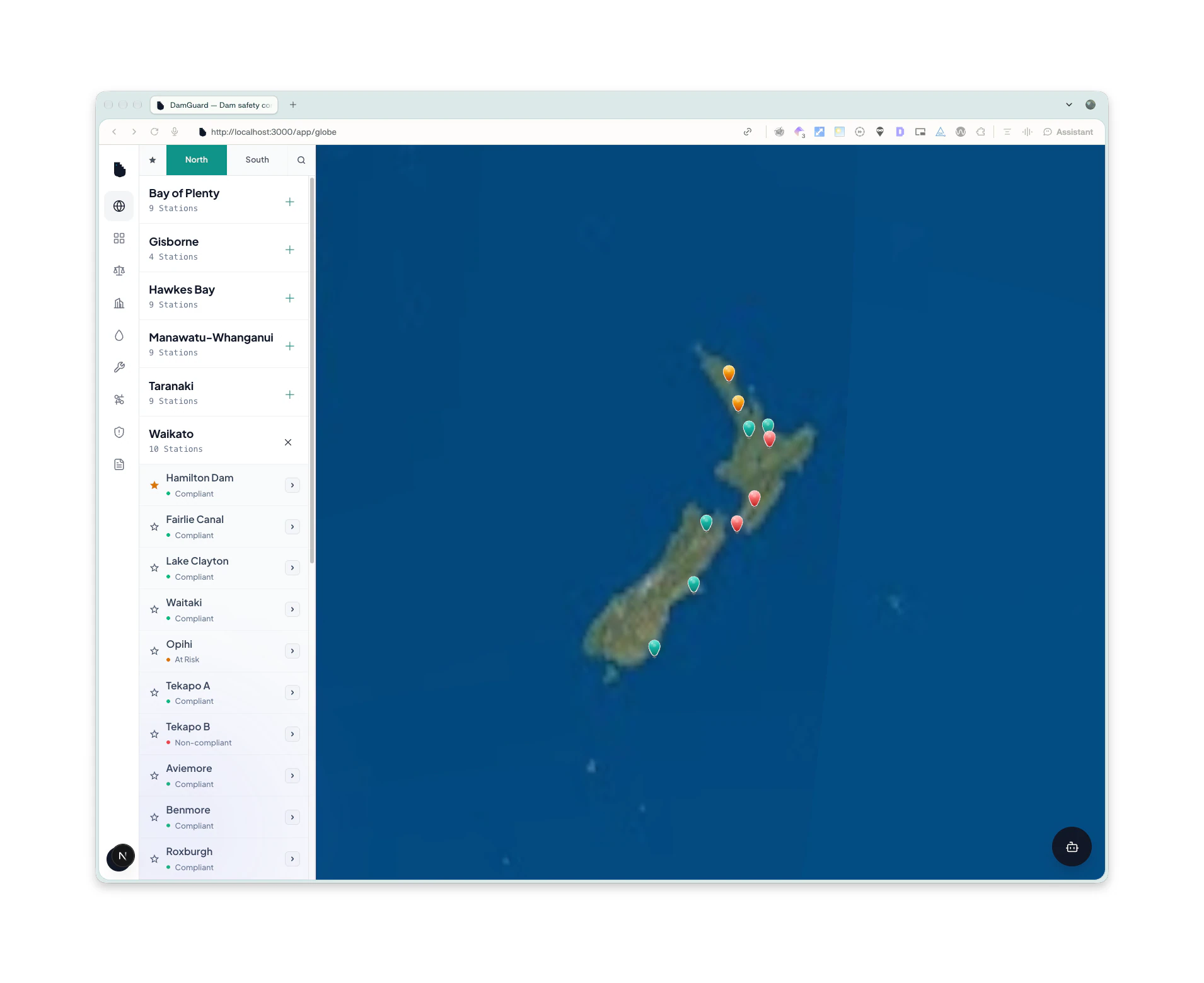
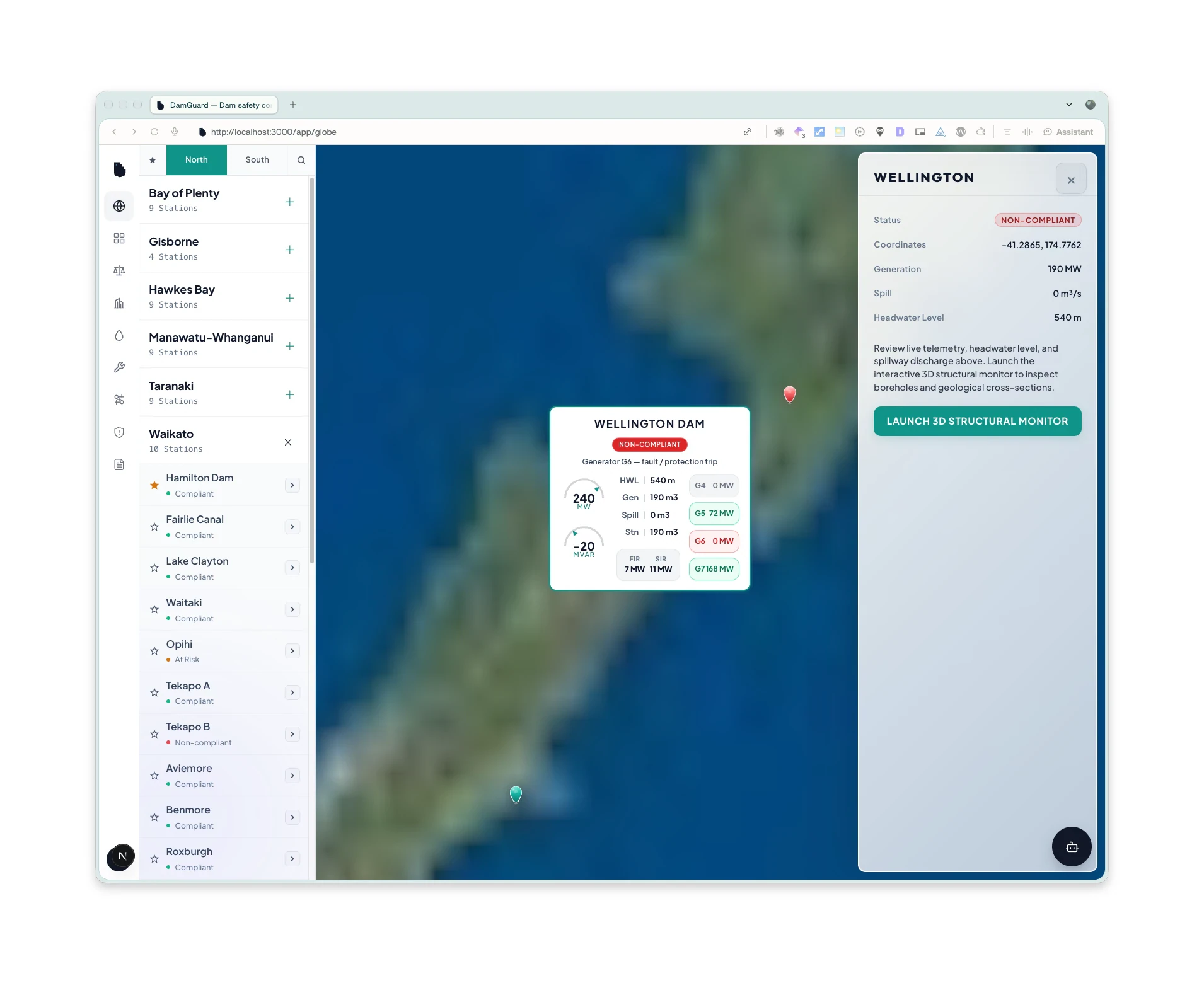
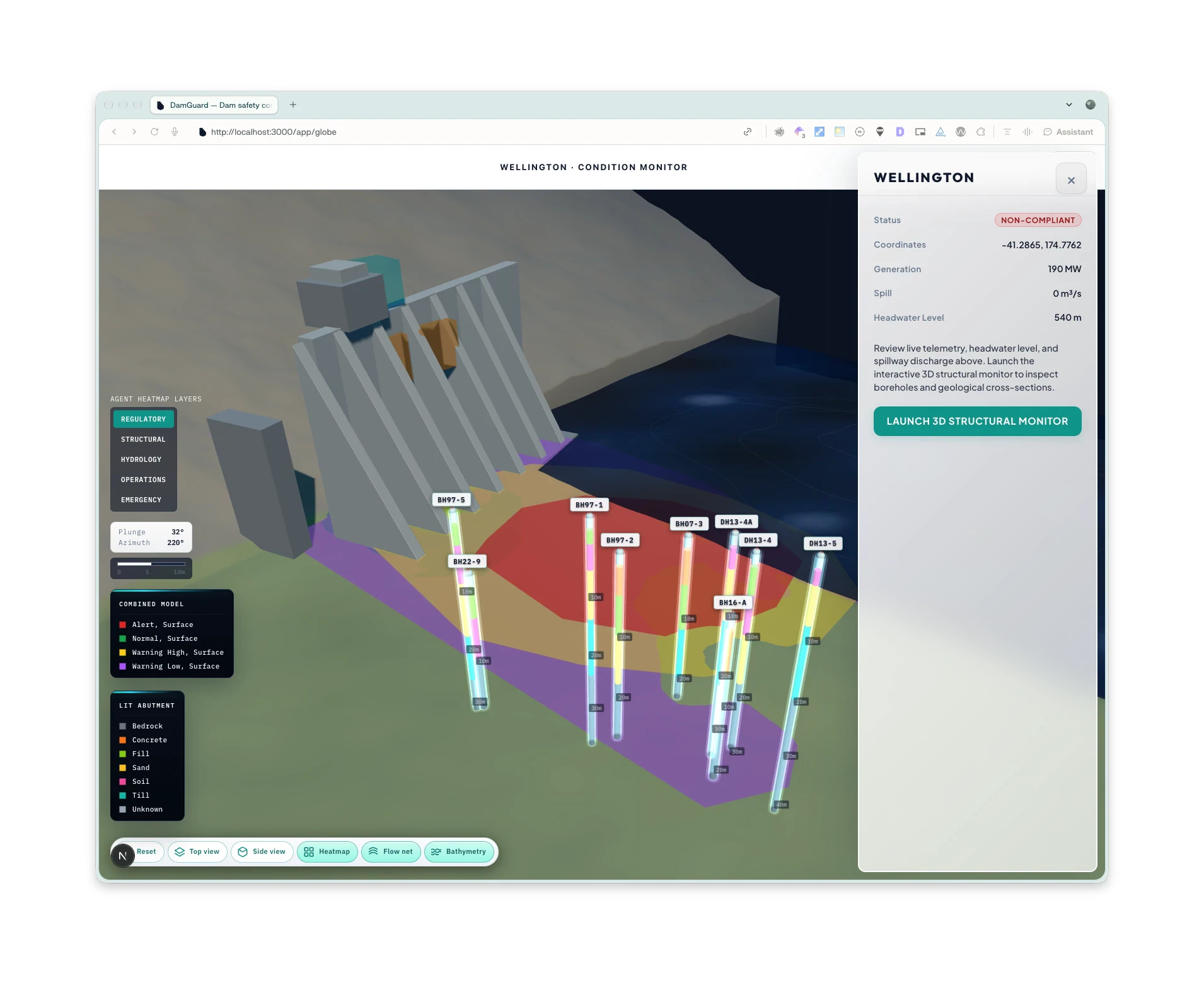
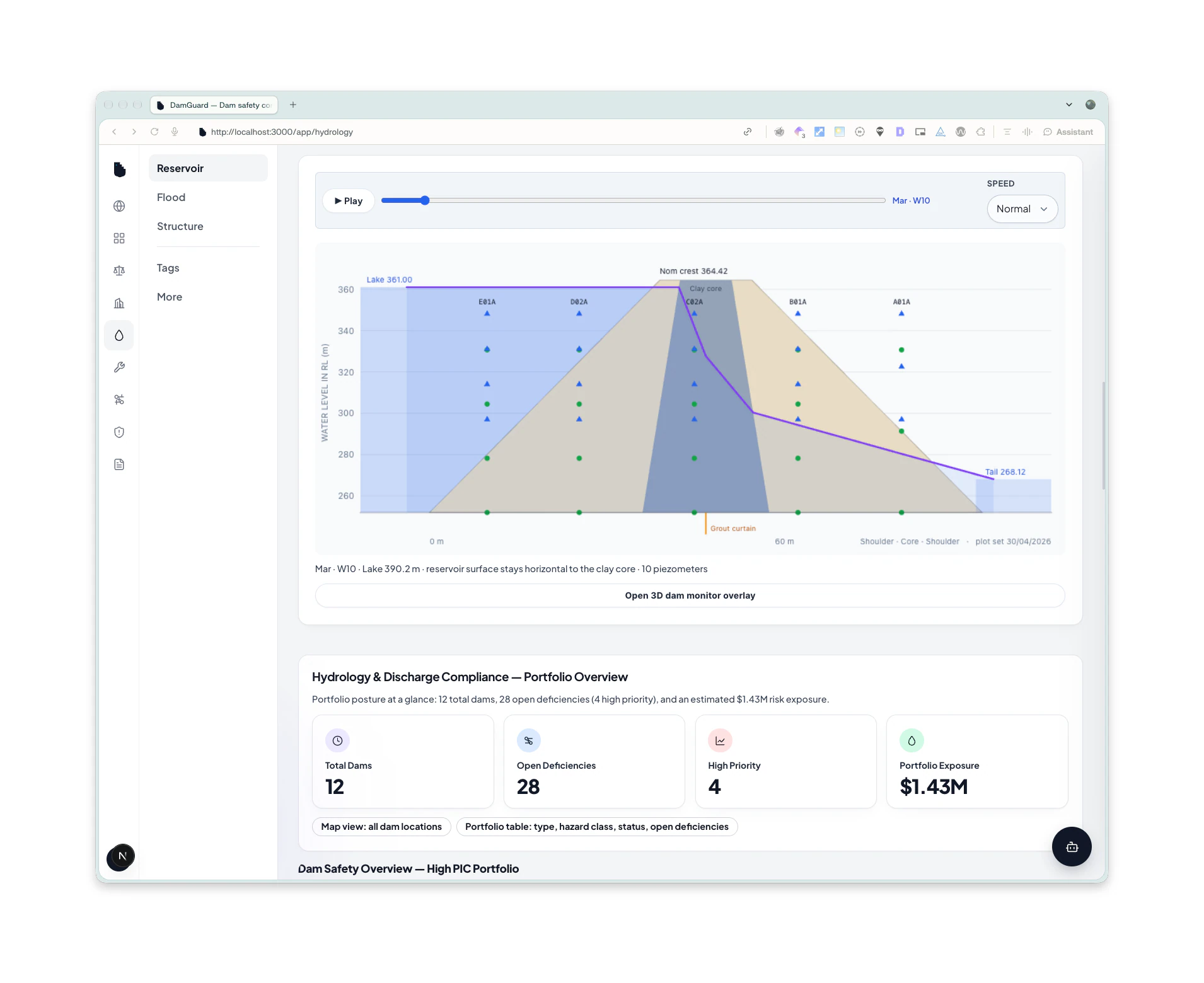
A portfolio globe with site drill-down and a full-screen 3D Dam Monitor: boreholes, lithology, agent heatmap layers and flow nets tied to place.
A heavy WebGL surface to maintain. It is also the moment in every demo where the room goes quiet.
The work
How it was built
- 01DiscoverCalls and walk-throughs of the client’s current process
- 02CompileTranscripts, files and constraints in one requirements brief
- 03SpecifyA detailed, sourced spec from Perplexity, reviewed and locked
- 04BuildDesigned and built with the latest AI models, in the production stack
- 05TestUser testing on every preview, with real users on real tasks
- 06IterateFindings and client feedback turned into the next round of changes
- 07ShipTests, security review and sign-off, then back to testing and iterating↻ Back to Test
Where AI was used
Five domain agents (regulatory, structural, hydrology, operations, emergency) work only within the asset’s evidence. Mapping suggestions carry a rationale and a confidence band, and nothing is certified without a person. Coding agents helped build it under the same rules as the other products: no production data, preview before production.